Optimizing Your Business with a Robust Voice and Data System
Nov 24, 2025
16 min read
Keeping your business talking and connected is super important, right? A good voice and data system makes sure everyone can reach each other and get their work done without a hitch. Think of it as the nervous system for your company. We're going to look at what makes these systems tick, how to keep them running smoothly, and what to watch out for when you're picking one. It’s not as complicated as it sounds, and getting it right can really make a difference in how your business operates day-to-day.
Key Takeaways
A solid internet connection is the bedrock of any reliable voice and data system. Without it, everything else struggles.
Cloud-based systems offer better uptime because they can switch locations if one spot has a problem.
Your communication devices matter – using good quality gear and keeping it updated helps avoid call quality issues.
Picking the right service provider is a big deal. Look for companies with good reviews and clear agreements about what they promise.
Having backup plans and security measures in place protects your business from losing service or data.
Understanding The Foundation Of A Reliable Voice And Data System
Setting up a business phone and internet system isn't just about picking the cheapest option. It's about building a solid base that keeps everyone connected, no matter what. Think of it like building a house; you need strong foundations before you can add the fancy stuff. For voice and data, this means looking at how the internet has changed, how cloud tech plays a role, and why making sure voice calls get priority is a big deal.
The Role Of Internet Advancement In VoIP Reliability
Remember when internet speeds felt like molasses? Those days are mostly behind us, thankfully. High-speed broadband, like fiber and even advanced 5G, means more consistent bandwidth and less lag. This jump in internet quality is a game-changer for Voice over Internet Protocol (VoIP). Calls are clearer, dropped connections are rarer, and that annoying jitter is significantly reduced. It’s not just about speed; it’s about the stability that high-speed connections provide, making VoIP a much more dependable choice for daily business.
Leveraging Cloud-Based Infrastructure For Uptime
Many modern voice and data systems now live in the cloud. This is a big plus for reliability. Instead of relying on a single server in your office that could go down during a power outage or local issue, cloud systems often use multiple, geographically spread-out data centers. These centers are linked by top-tier networks. So, if one location has a problem, your service can automatically switch to another, keeping your communications running. This kind of built-in redundancy is key for keeping your business online. It's a smart way to get robust Business Continuity and Disaster Recovery plans without a huge upfront investment.
The Importance Of Quality Of Service (QoS) Mechanisms
When your network is busy with lots of data – think file downloads, video streams, and emails – voice calls can sometimes get pushed aside, leading to choppy conversations. That's where Quality of Service (QoS) comes in. QoS mechanisms are like traffic cops for your network data. They identify voice traffic and give it priority over other types of data. This means that even when your network is under heavy load, your phone calls get the bandwidth they need to stay clear and uninterrupted. It’s a technical detail, but it makes a real difference in the day-to-day experience of using your phone system.
QoS is a set of technologies that manage network traffic to reduce latency and jitter for time-sensitive applications like voice and video calls. It ensures that critical data gets the necessary bandwidth and priority, even when the network is congested.
Key Factors For A Dependable Voice And Data System
So, you're looking to make sure your business phone and internet system doesn't conk out at the worst possible moment? That's smart. A lot goes into making sure calls go through clearly and data flows without a hitch. It's not just about plugging things in and hoping for the best. We need to think about a few main things to keep things running smoothly.
Internet Connection Quality: The Critical Element
This is probably the most important piece of the puzzle. If your internet connection is shaky, everything else will be too. Think of it like trying to have a conversation in a hurricane – not ideal. We're talking about needing a connection that's fast and steady, with low latency. Fiber optic or good cable internet usually fits the bill. Even some of the newer 5G options can be pretty solid these days. Without a strong internet pipe, your fancy VoIP system will just sputter. A stable connection is the bedrock of any reliable voice and data system.
Dependable Service Provider Selection Criteria
Who you get your service from matters a whole lot. You want a company that actually knows what they're doing and has a good track record. Look for providers who are upfront about their uptime guarantees – basically, how often their service is actually working. Also, check out their customer support. When something does go wrong, you don't want to be stuck on hold for hours. A provider that offers clear Service Level Agreements (SLAs) is a good sign; it means they're committed to a certain level of performance.
Here are some things to look for:
Uptime Guarantees: What percentage of the time does their service promise to be available?
Customer Support Responsiveness: How quickly do they typically respond to issues?
Service Level Agreements (SLAs): Do they have clear, written commitments to performance?
Reviews and Reputation: What do other businesses say about them?
Implementing Redundancy And Backup Plans
Stuff happens. Power outages, equipment failures, you name it. That's why having backups is a no-brainer. This means having systems in place that can take over if the main one goes down. For cloud-based systems, this often means the provider has multiple data centers. If one goes offline, your calls can automatically switch to another. For your data, regular backups are key. You don't want to lose important call logs or customer information if something unexpected occurs. It's wise to have a plan for what happens when the primary system fails.
Having a robust plan for what happens when things go wrong is just as important as setting up the system itself. It's about minimizing disruption and keeping your business operational, no matter the circumstances.
When choosing a contractor for your network infrastructure, look for experience and a solid history of successful projects. A good network cabling contractor can make a big difference in the long run.
Maximizing Business Efficiency With A Modern Voice And Data System
So, you've got your voice and data system humming along, but are you really getting the most out of it? A modern setup isn't just about making calls or sending emails; it's about making your whole operation run smoother and, frankly, making your life easier. Think about it – when your communication tools work well, everything else tends to fall into place.
Let's talk money. Old phone systems, the kind with all the wires and boxes in a closet, can be real budget drains. They cost a lot to buy, a lot to maintain, and often, a lot to upgrade. VoIP, or Voice over Internet Protocol, changes that game. By using your internet connection for calls, you can cut down on those monthly bills significantly. We're talking potential savings of up to 60% in some cases. Plus, consolidating your voice and data onto one network just makes sense from an infrastructure standpoint. It simplifies things and reduces the number of separate systems you need to manage.
These days, people don't always work from a desk. Whether your team is working from home, on the road, or just in a different part of the office, a modern system keeps them connected. Using VoIP, employees can communicate from pretty much any device – their smartphone, a laptop, even a tablet. This means no more missed calls or important messages because someone wasn't at their desk. It really helps keep everyone on the same page, no matter where they are. It’s about making sure work can happen, even when people aren't in the same building.
What happens when your business grows? You don't want your phone system to be the thing holding you back. Modern systems are built to grow with you. Need to add a few new lines for new hires? Or maybe you need to scale back for a bit? With cloud-based solutions, it's usually just a few clicks or a quick call to your provider to adjust your service. This flexibility means you're not overpaying for capacity you don't need, nor are you stuck when you suddenly need more.
A modern voice and data system should adapt to your business, not the other way around. It should be a tool that supports your current needs while being ready for whatever the future holds, without requiring a complete overhaul every time you expand or change direction.
Here's a quick look at how these systems help:
Reduced Costs: Lower monthly bills and less spent on hardware maintenance.
Improved Connectivity: Team members can connect from anywhere, on any device.
Adaptable Growth: Easily add or remove services as your business needs change.
Simplified Management: Often managed through a user-friendly online portal.
Ensuring Peak Performance With Your Voice And Data System
So, you've got a voice and data system in place, but is it actually working as well as it could be? It's not enough to just have the tech; you need to make sure it's running smoothly. Think of it like a car – you can own one, but if you never change the oil or check the tires, it's not going to get you very far, or at least not reliably. Let's talk about how to keep your business communication humming.
Optimizing Network Configuration For Seamless Communication
Your network is the highway for all your voice and data traffic. If that highway is congested or poorly designed, things are going to get slow and choppy. We're talking dropped calls, garbled messages, and data that takes forever to send. A big part of keeping things running well is setting up your network right from the start. This involves things like making sure you have enough bandwidth for all your users and applications, and setting up Quality of Service (QoS) rules. QoS is basically telling your network what's most important. For voice calls, you want those packets to get through fast and in order, so you're going to give them priority over, say, a large file download. It's about making sure the critical stuff, like talking to a customer, doesn't get stuck behind less urgent tasks. Properly configuring your routers and switches is key here. It might sound technical, but it's the backbone of good communication. Understanding the different wiring standards, like T568A and T568B, is also part of this foundational setup RJ45 wiring standards.
The Impact Of Communication Devices On Call Quality
It's easy to blame the internet or the service provider when calls aren't clear, but sometimes, the problem is right there on your desk. The phones, headsets, and even the computers you use for softphone apps all play a role. If you're using old, crackly headsets or a phone with a poor microphone, your voice is going to sound bad to the person on the other end, no matter how good your connection is. Investing in quality communication devices with good microphones and speakers makes a noticeable difference. It's not just about hearing; it's about being heard clearly.
Here are a few things to check regarding your devices:
Headsets: Look for noise-canceling features and comfortable designs for long calls.
IP Phones: Ensure they support HD voice and have clear displays.
Softphone Applications: Keep them updated and check for compatibility with your operating system.
Also, keep an eye on firmware updates for your IP phones and softphone applications. Outdated software can cause compatibility issues and performance problems.
Regular checks and updates aren't just for software; they apply to your physical hardware too. A well-maintained device is a reliable device.
Maintaining Your Voice And Data System Through Regular Updates
Just like your smartphone needs updates to fix bugs and add new features, your voice and data system does too. This includes everything from your phone system software to your network equipment firmware. These updates often contain security patches that protect you from threats, and they can also improve performance and stability. Ignoring updates is like leaving your digital doors unlocked and your engine sputtering. It's a simple step that pays off big time in keeping things running smoothly and securely.
Advanced Features Enhancing Your Voice And Data System
So, your business has a solid voice and data system in place. That's great! But are you getting the most out of it? Modern systems aren't just about making calls or sending emails anymore. They've got some pretty neat tricks up their sleeves that can really make a difference in how your team works and how you connect with customers.
HD Voice Quality For Crystal-Clear Communication
Remember when phone calls sounded like they were coming through a tin can? Yeah, me neither, thankfully. High-definition (HD) voice quality is pretty standard now, and it's a big deal. It means calls are clearer, background noise is cut down, and you can actually understand what the other person is saying without asking them to repeat themselves a dozen times. This isn't just about sounding professional; it helps avoid misunderstandings, which can save a lot of headaches and time.
Integration With Collaboration Tools
This is where things get really interesting. Your phone system can now play nicely with all sorts of other tools your team uses. Think about integrating with your CRM so you can see customer info pop up when they call, or linking with project management software. It makes switching between tasks so much smoother. Plus, many systems now bundle in features like team chat, video meetings, and file sharing. It's like having a central hub for all your team's communication needs.
Here's a quick look at what you might find:
Real-time status updates: See if your colleagues are available, busy, or away.
Team chat: Quick messages instead of lengthy emails.
HD video meetings: Face-to-face interaction without leaving your desk.
File sharing: Easily send documents and information within the platform.
Having these tools work together means less time spent hunting for information or switching between different apps. It just makes everything flow better.
AI-Driven Solutions For Operational Efficiency
Artificial intelligence (AI) is popping up everywhere, and your phone system is no exception. AI can do some pretty cool things behind the scenes. For example, it can help filter out spam calls automatically, so your team isn't constantly bothered by robocalls. Some systems can even transcribe voicemails into text, which is handy if you can't listen to a message right away. These smart features help cut down on distractions and make sure important communications get through without a hitch. It's all about making your day-to-day operations run more smoothly.
These advanced features transform a basic communication system into a powerful tool for productivity and connection. They help streamline workflows and reduce the friction that often comes with managing multiple communication channels.
Securing Your Voice And Data System Against Threats
Look, keeping your business communications safe is a big deal. With everything moving online, from your phone calls to your data, it's like leaving the front door unlocked if you're not careful. Cyberattacks are out there, and they can really mess things up, from stealing information to just shutting down your service when you need it most. Implementing robust security protocols and protecting sensitive data with encryption are non-negotiable steps for any modern business.
Implementing Robust Security Protocols
So, what's the first line of defense? It's all about putting solid security rules in place. Think of it like having a good alarm system and making sure everyone in the house knows not to let strangers in. For your voice and data system, this means:
Strong Passwords and Access Controls: Make sure only authorized people can get into your system. This isn't just about your computer login; it applies to your phone system admin panel too.
Regular Software Updates: Companies are always finding new ways to break into systems, and software makers are always patching those holes. Keeping everything updated is like patching up those weak spots before someone finds them.
Employee Training: Honestly, a lot of security breaches happen because someone clicked on a bad link or shared a password without realizing it. Training your team on what to look out for is super important. You can find resources for this kind of training through managed IT services.
Protecting Sensitive Data With Encryption
When information travels over the internet, it's like sending a postcard – anyone who intercepts it can read it. Encryption is like putting that message in a sealed, coded envelope. Only the person with the right key can open it. This is especially important for:
Customer Information: Things like names, addresses, and payment details need to be protected.
Internal Communications: Sensitive business plans or financial data shouldn't be readable by outsiders.
VoIP Calls: Even your conversations can be encrypted to prevent eavesdropping.
A well-configured firewall is a non-negotiable part of keeping your business communications safe. It's the first barrier against a lot of common online threats, and without it, you're leaving yourself wide open to problems that could cost you time, money, and your reputation.
The Voice & Data Systems Inc. Advantage
So, you're looking for a partner to really get your business communications and IT infrastructure humming? That's where Voice & Data Systems Inc. comes in. We're not just another vendor; we aim to be an extension of your team, making sure your technology works for you, not against you.
Managed VoIP and SIP Trunking Services
Let's talk about your phone system. If it's still stuck in the past, you're probably missing out. Our managed VoIP and SIP trunking services are designed to keep your business connected with clear, reliable calls. We handle the setup, maintenance, and optimization, so you don't have to worry about dropped calls or fuzzy audio. This means your team can focus on talking to customers, not troubleshooting their phones. We make sure your voice communication is as solid as your data network. If you're looking to upgrade your phone setup, consider looking into managed IT services.
Structured Cabling For Network Foundation
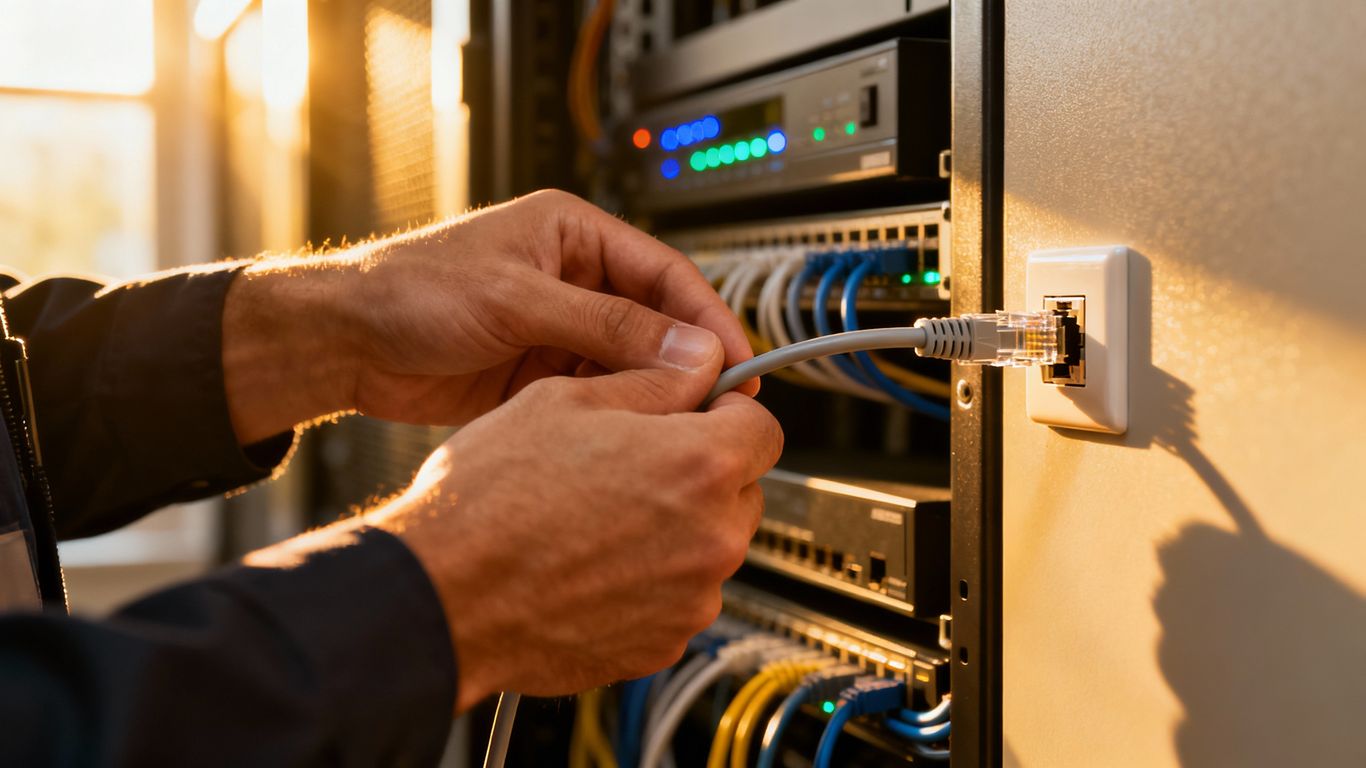
Everything runs on wires, right? Well, sort of. A messy or outdated cabling system is like having a highway with potholes – it slows everything down. We specialize in setting up structured cabling that's neat, organized, and built for speed and future growth. This isn't just about making your server room look tidy; it's about making sure your network can handle all the data your business throws at it, now and down the road.
Video Surveillance and Access Control Integration
Security is a big deal these days. We help integrate video surveillance and access control systems directly into your network. This means you get a unified view of your security, all managed through systems that are reliable and secure. It’s about peace of mind, knowing your premises are monitored and access is controlled properly.
Wireless Network Management
Wi-Fi is everywhere, but good Wi-Fi? That's another story. We design and manage wireless networks that give you strong, dependable coverage where you need it. No more dead spots or dropped connections when you're trying to get work done. We make sure your wireless is as robust as your wired connections, keeping your team connected and productive.
Partnering with us means you get a team that understands how all these pieces fit together. We don't just install a system; we build a communication and IT infrastructure that supports your business goals.
How A Strong Phone System Impacts Business Performance
So, you've got your voice and data system humming along, but are you really getting the most out of it? A modern setup isn't just about making calls or sending emails; it's about making your whole operation run smoother and, frankly, making your life easier. Think about it – when your communication tools work well, everything else tends to fall into place. The difference between a good business and an average one often boils down to how effectively it communicates.
Enhance Customer Satisfaction
Nobody likes being put on hold or having their call dropped. With outdated systems, missed calls and long wait times can really frustrate customers. A robust phone system, especially one using VoIP, comes with features that help you respond faster. Think about call routing that sends callers to the right person immediately, or voicemail that gets sent straight to an email inbox. This means quicker responses and a smoother experience for everyone calling in. It shows you value their time and their business.
Increase Productivity
When your communication tools are efficient, your team can focus on what matters most. Features like call forwarding, which lets you send calls to your mobile when you're out, or voicemail-to-email transcription, save precious minutes throughout the day. Call analytics can also give you insights into call volume and patterns, helping you manage your team's workload better. These small time-savers add up, keeping your team organized and on task.
Scale Easily
As your business grows, you don't want your phone system to become a bottleneck. Traditional systems often require expensive hardware upgrades just to add a few more lines. Modern, cloud-based VoIP solutions, however, are built for flexibility. Need to add five new employees? It's usually just a matter of a few clicks to add new lines or extensions. Conversely, if you need to scale back, that's also straightforward. This adaptability means your communication infrastructure can grow right alongside your business without major headaches or unexpected costs. It's a smart way to prepare for the future, much like how many companies are looking at the leading technology companies for future growth.
A strong phone system is no longer just a nice-to-have; it's a necessity for businesses aiming to compete effectively today. It's the backbone of how you connect with clients, partners, and your own team members, directly influencing your ability to provide top-notch service and operate efficiently.
A good phone system can really help your business do better. It makes talking to customers and your team smoother, which means less wasted time and more happy clients. Think about how much easier things would be if calls always went through and you could easily connect with anyone. Ready to see how a better phone setup can boost your company? Visit our website to learn more!
Wrapping It Up
So, we've gone over a lot about why having a solid voice and data system is a big deal for your business. It's really about more than just making calls; it's about keeping everything running smoothly, talking to customers without issues, and making sure your team can connect from wherever they are. With the internet getting better and systems getting smarter, it's actually easier than ever to get a setup that just works. Think about what we talked about – a good internet connection, picking the right provider, and keeping your equipment in good shape. Doing these things means fewer headaches and more time to focus on actually running your business. It really can make a big difference.
Frequently Asked Questions
What's the most important thing for a good business phone and internet system?
The most critical part is having a super reliable and fast internet connection. Think of it as the highway for all your calls and data. If the highway is bumpy or slow, everything else will have problems.
How does the cloud help keep phone systems working?
Cloud systems are like having your phone service spread across many safe places. If one place has an issue, like a power outage, your calls can automatically switch to another working place, so your business stays connected without interruption.
Why is 'Quality of Service' (QoS) important for business calls?
QoS is like a traffic manager for your internet data. It makes sure that voice calls get top priority, even when lots of other data is being sent. This stops calls from sounding choppy or cutting out, especially when your network is busy.
What should I look for when choosing an internet or phone service provider?
You want a provider with a good history of being reliable, clear about what they promise (like uptime guarantees), and offers helpful customer support. It's good to have a written agreement that spells out their service quality.
Why is having backup plans for my communication system a good idea?
Things can go wrong unexpectedly, like equipment failures or internet outages. Having backup plans means you have a Plan B (or C!) ready to go, so your business can keep communicating even when the main system has a problem.
Can a modern phone system actually save my business money?
Yes! Systems like VoIP often use your internet connection, which can be much cheaper than old phone lines. Plus, they can reduce the need for separate systems, simplifying things and cutting down on maintenance costs.
How do things like headsets affect call quality?
Even with a great internet connection, using old or low-quality headsets or phones can make your voice sound bad to others. Investing in good communication gear helps ensure you're heard clearly, making conversations much better.
What are some advanced features that make voice and data systems better?
Modern systems offer things like super clear HD voice calls, easy integration with other work tools like chat and video meetings, and even smart AI features that can help manage tasks or filter spam calls, making your business run more smoothly.