Find Expert Network Installation Services Near Me: A Comprehensive Guide
Oct 28, 2025
19 min read
Setting up a new network or fixing an old one can be a real headache. You want things to run smoothly, right? Slow internet or constant disconnects are just not good for business, or even for home. Finding the right help is key. But with so many companies out there, how do you pick the best one for network installation services near me? It can feel like a maze, but we're here to help you figure it out.
Key Takeaways
Figure out exactly what you need before you start looking for help. Think about the type of network, how big the job is, your budget, and when you need it done.
When you're checking out companies, look at what other people say about them. Good reviews and a solid history matter a lot.
Make sure the company you choose can actually do everything you need, from planning and setting up to fixing things later on.
Don't just go for the cheapest option. Compare what you get for your money, including the company's track record and the services they provide.
Finding someone local can be helpful for quicker service and support, so keep 'network installation services near me' in mind during your search.
Understanding Your Network Installation Needs
Before you even start looking at companies that can set up your network, it’s a good idea to figure out exactly what you need. This way, you won't waste time looking at services that just aren't a good fit. Think of it like planning a trip – you wouldn't book a flight without knowing where you want to go, right?
Assessing Your Requirements
This is where you get down to the nitty-gritty of what your network needs to do. It's not just about getting internet; it's about how you'll use it and what kind of setup will work best for you.
Type of Network: Are you leaning towards a wired setup, which is generally more stable and faster for fixed locations, or a wireless one for flexibility and ease of access throughout your space? Sometimes, a mix of both is the best answer.
Scope of Work: How big is this project? Are we talking about a small home office with just a couple of devices, or a multi-floor business building with dozens or even hundreds of users? The size of the job really changes what kind of equipment and labor you'll need.
Budget and Timeline: How much money can you realistically put towards this? And just as importantly, when does it absolutely need to be up and running? Some solutions cost more but can be installed faster, while others might be cheaper but take longer.
Figuring out these basic details upfront makes the whole process smoother. It helps you talk to installers more effectively and ensures you get a system that actually works for you, not just a generic setup.
Let's break down the different types of networks and what they involve:
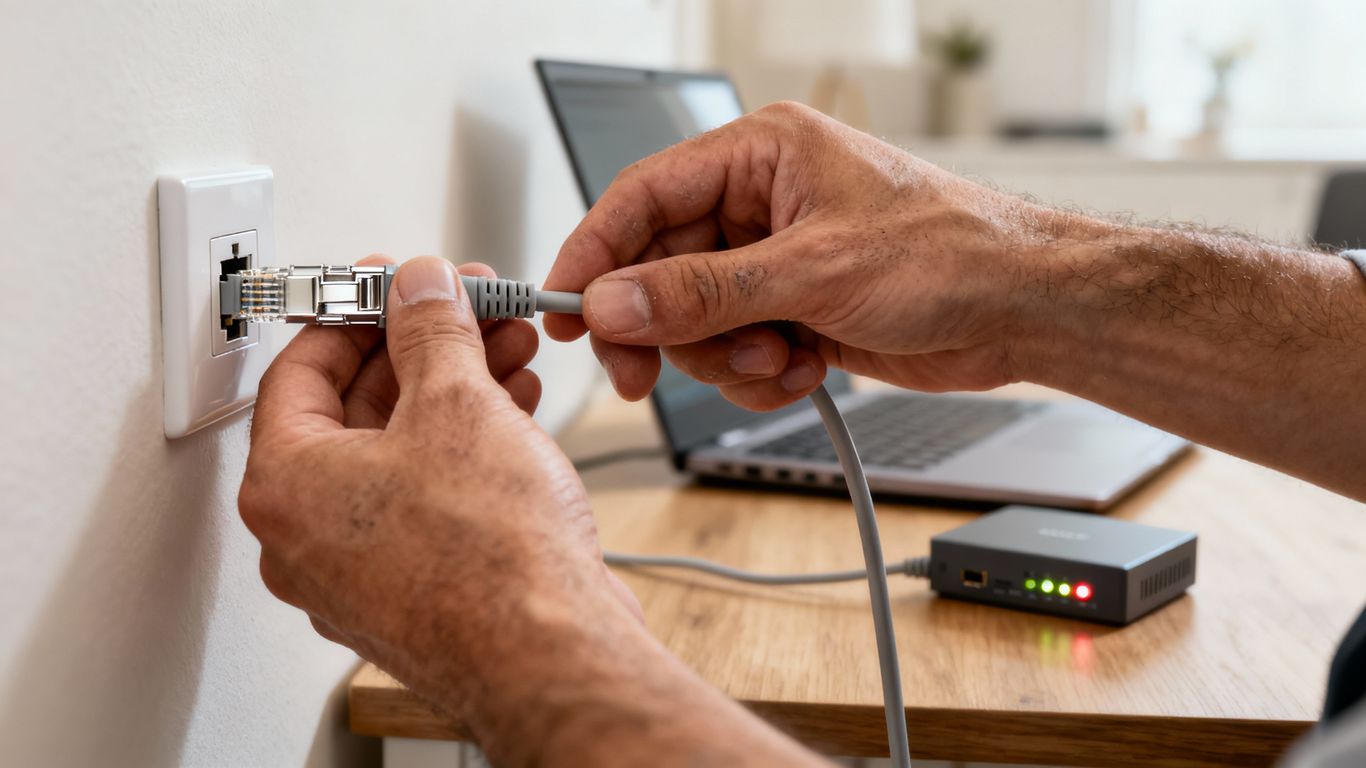
Wired Networks (Ethernet): These use physical cables to connect devices. They're great for stationary computers, servers, and areas where speed and reliability are top priorities. Think of gaming PCs or office workstations.
Wireless Networks (Wi-Fi): These use radio waves to connect devices. They offer a lot of freedom, letting you connect laptops, phones, and tablets from anywhere within range. Perfect for common areas, mobile devices, and places where running cables is difficult.
Hybrid Networks: Many setups use a combination. For example, you might have a main wired backbone for your servers and routers, with Wi-Fi access points extending connectivity to other areas.
Researching Network Installation Companies
Once you've got a handle on what you actually need for your network, it's time to start looking at the companies that can do the job. This part can feel a bit overwhelming with so many options out there, but focusing on a few key areas will make it much easier. You're not just looking for someone to plug in cables; you're looking for a partner who can set up your digital backbone correctly.
Reputation and Reviews
This is where you get the real scoop on how a company operates. Don't just take their word for it. Check out what other people are saying. Look at review sites like Google or Yelp, but also see if they have testimonials on their own website. A company with a long history of happy customers is usually a safe bet. It tells you they're reliable and do good work.
Online Reviews: Scan platforms for consistent positive feedback.
Testimonials: Read direct accounts from previous clients on their site.
Better Business Bureau (BBB): Check for any formal complaints or ratings.
Pay attention to the details in reviews. Are people praising their punctuality, the quality of their work, or their customer service? Negative reviews can also be informative if they point to recurring issues.
Experience and Expertise
How long have they been doing this? A company that's been around for a while likely has seen and fixed just about every network problem imaginable. This experience translates into smoother installations and fewer headaches for you. Also, consider if they have experience with the specific type of network or industry you're in. For example, setting up a network for a small retail shop is different from a large manufacturing plant. Some companies might even specialize in certain areas, like IT services for specific industries.
Industry Specializations
Some network installation outfits really focus on particular types of businesses or network setups. Maybe they're wizards with fiber optics, or perhaps they excel at creating secure wireless networks for busy offices. It's worth finding out if their specialty lines up with your project. If you're in a niche industry, like hospitality or cannabis operations, finding a company with experience in that area can be a huge plus, as they'll understand the unique demands.
Specialization Area | Common Needs Addressed |
|---|---|
Hospitality | Wi-Fi, data cabling |
Retail | POS systems, inventory |
Healthcare | Secure data, compliance |
Education | Classroom networks, Wi-Fi |
Finding the right company means matching their skills to your specific requirements. Don't be afraid to ask them about their past projects and how they handled similar situations.
Evaluating Network Installation Services Offered
When you're looking for someone to set up your network, it's not just about finding a name on a list. You really need to check out what they actually do. Think of it like hiring a contractor for your house – you wouldn't just pick the first one you see, right? You want to know they can handle the job, from start to finish.
Comprehensive Installation Services
This is the big one. What exactly does their "installation service" include? It should be more than just plugging things in. A good company will walk you through the whole process.
Initial Consultation and Planning: They should sit down with you, figure out what you need, and draw up a plan. This means understanding your space, how many devices you have, and what you'll be using the network for. It's like sketching out the blueprints before building.
Physical Installation: This covers running cables, mounting access points, setting up routers and switches, and making sure everything is tidy and out of the way. They should be able to handle both wired and wireless setups.
Testing and Fine-Tuning: After everything is physically in place, they need to test it. This means checking speeds, signal strength, and making sure all devices can connect without issues. They should tweak settings to get the best performance possible.
Consultation and Planning
This part is super important. Before any wires are run or equipment is bought, a solid plan needs to be in place. A good installer will ask a lot of questions to understand your specific situation. Are you a small business with a few employees, or a larger operation with multiple floors? Do you need a super-fast connection for video editing, or just reliable internet for emails and browsing? They should help you design a network that fits your current needs and doesn't break the bank.
Installation and Optimization
This is where the actual work happens. It involves setting up all the hardware – the routers, switches, access points, and running all the necessary cables. The goal here is to get a network that's not just working, but working well. This means making sure the signal is strong everywhere you need it and that speeds are as fast as they can be for your setup. They should also make sure the installation looks neat, with cables managed properly.
Additional Support and Maintenance
What happens after they leave? A good company won't just disappear. They should offer some kind of ongoing support. This could be troubleshooting if something goes wrong, or even regular check-ups to keep things running smoothly. If you plan to expand your business or add more devices later, they should be able to help with upgrades too. It’s good to know someone’s got your back if network problems pop up down the road.
When evaluating services, think about the entire lifecycle of your network. It's not just about the initial setup; it's about ensuring reliability, performance, and the ability to adapt as your needs change over time. A partner who offers ongoing support and maintenance can save you a lot of headaches and potential costs in the long run.
Getting Quotes and Comparing Costs
So, you've narrowed down your choices for network installation companies. Great! Now comes the part where you figure out who's going to do the work and how much it'll set you back. It’s not just about finding the cheapest option, though. You really want to get the most bang for your buck.
Requesting Detailed Proposals
When you ask for a quote, don't just accept a number. You need to see a detailed proposal. This should lay out exactly what they plan to do, the specific parts and materials they'll use, and a realistic timeline for when the job will be finished. Think of it like a blueprint for the project. It helps you understand what you're paying for and makes sure everyone's on the same page from the start. This way, there are fewer surprises down the road.
Ensuring Transparency in Quotes
This is super important. A good quote is clear and upfront. There shouldn't be any hidden fees or charges that pop up later. Ask them to break down all the costs, including labor, equipment, and any potential extras. If something seems unclear, ask for clarification. A trustworthy company will be happy to explain everything. It’s better to have a slightly higher quote that’s fully transparent than a lower one that leaves you guessing.
Comparing Value for Money
Once you have a few detailed, transparent quotes in hand, it's time to compare. Don't just look at the bottom line. Consider what each company brings to the table. What's their track record like? How much experience do they have with projects similar to yours? What kind of support do they offer after the installation is done? Sometimes, paying a bit more for a company with a solid reputation and excellent service means you'll save money and headaches in the long run. It’s about finding the right partner for your specific needs, not just the lowest price tag.
Here’s a quick way to think about it:
Scope of Work: Does the quote cover everything you need done?
Materials: Are they using quality components?
Timeline: Is the proposed schedule realistic?
Support: What happens after the installation?
Reputation: What do other clients say?
When you're comparing quotes, remember that the cheapest option isn't always the best. Look at the overall value, including the quality of service, the company's experience, and what kind of support they provide after the job is finished. This approach helps you make a smart decision that benefits your business long-term.
Key Considerations for Network Installation
When you're getting ready to set up or upgrade your network, there are a few big things to think about. It's not just about plugging things in; it's about building a solid foundation for your connectivity. Getting this right from the start saves a lot of headaches down the road.
Wired vs. Wireless Network Solutions
This is a pretty big decision. Wired networks, usually using Ethernet cables, tend to be faster and more stable. They're great for places where you need a really dependable connection, like for servers or workstations that do a lot of heavy lifting. Think of it as a direct highway for your data. On the flip side, wireless networks offer flexibility. You can connect from pretty much anywhere in your space without being tied down by cables. This is awesome for mobile devices, laptops, and general convenience. However, wireless can sometimes be slower and more prone to interference. Choosing between wired and wireless, or a combination of both, really depends on how you plan to use your network and what your priorities are.
Scalability for Future Growth
Your business or home setup isn't static, right? Things change, and your network should be able to keep up. When you're planning your installation, think about what your needs might be in a year or five years. Will you be adding more devices? Moving to a bigger space? Increasing your internet speed? A good installation plan accounts for this. It means using cabling that can handle higher speeds later on or setting up your wireless system so it can cover a larger area if needed. It’s about building a network that can grow with you.
Security and Reliability
Nobody wants a network that's constantly dropping out or, worse, is easily hacked. Reliability means your connection is stable and available when you need it. This often comes down to the quality of the installation and the equipment used. Security is about protecting your data and your network from unauthorized access. This involves things like strong passwords, firewalls, and making sure your network is set up in a way that minimizes vulnerabilities. For businesses, this is especially important to protect sensitive information. A well-installed network is both dependable and secure.
Planning your network installation involves more than just picking out routers. You need to consider the physical setup, like whether to use cables or go wireless, how you'll handle more devices later on, and how to keep everything safe and running smoothly. Thinking through these points now makes a big difference.
Finding Local Network Installation Experts
When you're looking to get your network set up or fixed, finding someone close by can make a big difference. It's not just about convenience, though that's a part of it. Think about it: if something goes wrong after the installation, having a local team you can call means they can get to you faster. This can save you a lot of headaches and downtime, especially if your business relies heavily on its network.
Importance of Proximity
Why does being nearby matter so much?
Faster Response Times: If your internet goes down or you have a network issue, a local company can usually get a technician to your location much quicker than someone who has to travel a long distance.
Reduced Travel Costs: Often, companies charge less for travel time or mileage when they're working in their local service area. This can translate into savings for you.
Better Understanding of Local Infrastructure: Local providers might have a better grasp of the specific challenges or opportunities related to network setup in your area, like local building codes or common connectivity issues.
Easier Follow-Up: For ongoing maintenance or future upgrades, having a local partner makes scheduling and communication much simpler.
Local vs. National Providers
It's a common question: should you go with a big national chain or a smaller, local business? Both have their pros and cons.
National Providers: These companies often have standardized processes and a wide range of services. They might have more resources and a larger pool of technicians. However, they can sometimes feel less personal, and response times might be longer if you're not near one of their main hubs.
Local Providers: Local companies usually offer more personalized service. You're more likely to build a direct relationship with the team. They're often more flexible and can adapt to your specific needs. The main potential downside is that their resources might be more limited compared to a national outfit.
Identifying Near Me Services
So, how do you actually find these local experts? It's not as hard as it might seem.
Online Search Engines: Start with a simple search like "network installation services near me" or "local IT support for networks." Look at the results that show companies located in your town or immediate surrounding areas.
Review Sites: Check out platforms like Google Reviews, Yelp, or even industry-specific forums. Pay attention to reviews that mention the company's location and how responsive they were.
Ask for Recommendations: Talk to other businesses in your area. Word-of-mouth referrals are often the best way to find reliable local service providers.
Check Company Websites: Once you find a few potential candidates, visit their websites. Look for "Contact Us" or "Service Area" pages to confirm they serve your location. You might also find details about their local presence and team.
Finding a local network installation expert means you're likely to get quicker help when you need it and potentially save on costs. It's about building a relationship with a team that understands your immediate environment and can respond efficiently to your network needs.
Here's a quick look at what to expect from different types of providers:
Provider Type | Pros | Cons |
|---|---|---|
Local | Personalized service, faster response | Potentially fewer resources |
National | Wide service range, large resources | Less personal, potentially slower response |
Hybrid | Balance of resources and local focus | Varies greatly by company |
The Role of Expert Networks in Business
How Expert Networks Function
Think of expert networks as a bridge. On one side, you have businesses needing specific, real-world knowledge. On the other, you have individuals who possess that exact knowledge from years of hands-on experience. These networks act as the go-between, connecting these two sides efficiently. They’ve grown a lot since they first popped up, becoming a pretty big industry now. Companies use them to get quick answers to tough questions, understand new markets, or figure out what’s coming next in their field. It’s like having a direct line to the people who’ve been there and done that.
Sourcing and Vetting Specialists
So, how do these networks find the right people? It’s not just a quick search. They actively look for specialists across all sorts of industries. This involves checking credentials, making sure their experience is legit, and sometimes even doing background checks. They have big lists of people, but often, they’ll go out and find someone new just for your specific need. They also have rules in place to make sure nobody accidentally shares secret company information. It’s a pretty thorough process to make sure you’re talking to the right person and that everything stays above board.
Types of Expert Network Services
Expert networks aren't just about one-off phone calls, though that's a big part of it. They can help in a few different ways:
Quick Consultations: These are usually short calls, maybe 30 to 60 minutes, where you ask specific questions and get direct answers from someone with experience.
Longer Engagements: For bigger projects, you might bring an expert in for ongoing advice over weeks or months. Think of them as a part-time advisor.
Market Insights: Some networks gather anonymized information from many consultations to spot trends or patterns in the market. It’s like a collective intelligence report.
Event Speakers: They can also connect you with industry leaders to speak at your company events or workshops.
The main idea is to get targeted knowledge quickly and without the huge cost or time commitment of traditional consulting firms. It's about getting the right information from the right person at the right time.
Choosing the Right Network Installation Partner
So, you've figured out what you need for your network, and you've done some digging into companies. Now comes the part where you actually pick who's going to do the work. It's not just about finding someone who can plug in cables; it's about finding a partner who gets what you're trying to achieve. Think of it like hiring a contractor for your house – you want someone reliable, skilled, and who won't leave you with a mess.
Matching Services to Your Needs
First things first, make sure the company's services line up with what you actually need. If you're setting up a small office with just a few computers, you probably don't need a company that specializes in massive data centers. On the flip side, if you're building a large facility, a company that only does home Wi-Fi might not cut it.
Here’s a quick checklist to see if they fit:
Does their service list include exactly what you need? (e.g., structured cabling, Wi-Fi setup, server room build-out)
Have they worked on projects similar in size and complexity to yours?
Do they offer planning and consultation, or just the physical installation?
Assessing Technical Capabilities
This is where you want to get a little more specific. What kind of tech do they use? Are they up-to-date with the latest standards? You don't want someone installing your network with yesterday's technology.
What certifications do their technicians hold? (e.g., BICSI, CompTIA Network+)
What brands of equipment do they typically work with? Are they compatible with your preferred vendors?
Do they have experience with specific network types you require? (e.g., fiber optics, high-density Wi-Fi)
Client Testimonials and Case Studies
Don't just take their word for it. See what other people have said. Good companies will have testimonials on their website, and often, they'll have case studies detailing past projects. These can give you a real sense of their work quality and how they handle challenges.
Look for feedback that talks about reliability, communication during the project, and how the network performed after installation. It’s easy to find companies that can install things, but finding one that does it well and stands behind their work is the real goal.
It's also a good idea to ask for references you can actually call. Talking to a past client can give you insights you won't find anywhere else. They can tell you about any hiccups, how the company responded, and if they'd hire them again. This step is super important for making sure you're not just getting a service, but a solid partnership for your network needs.
Understanding Network Installation Costs
Figuring out the cost of getting a new network set up can feel a bit like a guessing game sometimes. It's not just about the price tag you see upfront; there are a few things that can really change the final number. The complexity of your network and the specific services you need are the biggest drivers of cost.
Factors Influencing Pricing
Several elements play a role in how much you'll end up paying for network installation. Think about these:
Size and Scope of the Project: A small home office network will naturally cost less than setting up a robust system for a large commercial building with multiple floors and many users.
Type of Network: Are you going for a fully wired Ethernet setup, a robust Wi-Fi system, or a hybrid approach? Wired installations often involve more labor and materials (cables, conduits) than wireless, but can offer more stability.
Hardware and Equipment: The quality and quantity of routers, switches, access points, and cabling you need will impact the price. High-end, enterprise-grade equipment costs more than basic consumer-grade gear.
Labor and Installation Time: The more complex the installation, the longer it will take, and the more labor costs will add up. This includes the time spent planning, running cables, configuring devices, and testing.
Site Conditions: Difficult installation environments, like older buildings with limited access points or concrete walls that interfere with Wi-Fi signals, can increase labor and material costs.
Specialized Services: If you need advanced features like network security setup, server room configuration, or integration with existing systems, these specialized services will add to the overall expense.
Hidden Fees to Watch For
It's always a good idea to be aware of potential extra charges that might not be immediately obvious in an initial quote. Keep an eye out for:
Unforeseen site issues: Sometimes, during installation, unexpected problems arise, like discovering old, faulty wiring that needs replacing or structural challenges.
Expedited service fees: If you need the installation done faster than the standard timeline, expect to pay a premium.
Travel costs: If the installation company is located far from your site, they might include travel expenses in their quote.
Post-installation adjustments: While some minor tweaks are usually included, significant changes or additions after the main installation is complete might incur extra charges.
Maximizing Your Investment
To make sure you're getting the best bang for your buck, consider these points:
Get detailed quotes: Don't just ask for a total price. Request a breakdown of costs for labor, equipment, and any other services. This helps you compare apples to apples.
Prioritize needs over wants: Clearly define what your network must do versus what would be nice to have. Focus your budget on the essential functionalities.
Think long-term: While it might cost a bit more upfront, investing in higher-quality equipment and a scalable design can save you money on upgrades and replacements down the line.
Understanding the cost structure helps you have a more productive conversation with potential installers. It allows you to ask the right questions and make an informed decision that aligns with both your technical requirements and your financial plan. Don't be afraid to ask for clarification on any part of a quote that seems unclear.
Post-Installation Support and Maintenance
So, you've got your new network all set up and running. That's great! But honestly, the job isn't really done yet. Think of it like building a house; you wouldn't just walk away after the walls are up, right? You need to make sure everything keeps working smoothly.
Ongoing Network Management
This is all about keeping an eye on things. It means regularly checking that your network is healthy, performing well, and secure. It's not a one-time thing; it's a continuous process. Good management helps catch small issues before they blow up into big, expensive problems. This can involve things like:
Monitoring network traffic to spot unusual activity.
Keeping an eye on server performance and resource usage.
Ensuring all connected devices are accounted for and functioning.
Regularly reviewing system logs for any error messages.
Troubleshooting and Repairs
Even with the best setup, things can go wrong. Maybe a cable gets damaged, a piece of equipment fails, or a software glitch pops up. When that happens, you need someone who can figure out what's broken and fix it fast. Quick and effective troubleshooting is key to minimizing downtime. This means having a plan in place for when issues arise, so you're not scrambling in the dark.
Planning for Upgrades
Technology doesn't stand still, and neither should your network. What works perfectly today might be a bit slow or outdated in a year or two. Planning for upgrades means looking ahead. It's about knowing when it's time to add more capacity, replace old hardware, or adopt new technologies that can help your business grow. This proactive approach saves you from being left behind and keeps your network efficient.
Setting up a network is just the first step. The real work comes in keeping it running reliably and adapting it as your needs change. Without ongoing attention, even the best installation can become a bottleneck.
Once your system is up and running, we don't just leave you hanging. Our team is here to help with any questions or issues that pop up after setup. We offer ongoing support to make sure everything keeps working smoothly. Need help with your tech? Visit our website to learn more about our support options!
Wrapping It Up
So, getting your network set up right doesn't have to be a headache. By taking a little time to figure out what you actually need, doing some digging on local companies, and comparing what they offer and what they charge, you can find someone good to handle the job. It’s all about finding the right fit for your specific situation. Don't just pick the first name you see or the cheapest option. A solid network is pretty important these days, whether it's for your home or your business, and getting it installed by pros makes a big difference. Take these steps, and you'll be well on your way to a reliable connection.
Frequently Asked Questions
What's the first thing I should do before looking for someone to set up my network?
Before you start searching for help, think about what you really need. Do you want a wired or wireless setup? How big is the area you need covered? Knowing these details will help you find the right company for the job.
How do I know if a network installation company is good?
Check what other people say about them online! Look for reviews on sites like Google or Yelp. Also, see if they have testimonials on their website from happy customers. Good reviews and positive feedback are great signs.
What kind of services should a network installer offer?
A good company will help you plan your network, install everything carefully, and then test it to make sure it works perfectly. They should also offer help and fixes if something goes wrong later on.
Should I always pick the cheapest option for network installation?
Not necessarily! While cost is important, it's better to compare what you get for your money. A company that costs a bit more but has a great reputation and offers better service might be a smarter choice in the long run.
Is it better to have a wired or wireless network?
Wired networks are usually faster and more stable, which is great for businesses or gamers. Wireless networks offer more freedom and are easier to set up in homes. The best choice depends on what you'll be using the network for.
Why is it important to find a network installer that's nearby?
Having someone local means they can get to you quickly if there's a problem. They also might understand the local area better. It's often easier to work with someone who's just a short drive away.
How long does it usually take to install a network?
The time it takes can change a lot depending on how big and complicated the job is. A simple home setup might take a few hours, while a large office network could take several days or even a couple of weeks.
What happens after the network is installed?
A good installation company will make sure your network is working well and might offer ongoing support. This could include fixing problems, doing regular check-ups, or helping you add more to your network later if you need it.