
Mytek Pros delivers end-to-end IT services, managed security, and low-voltage design/build for businesses across San Diego County and California.
Loading
Mytek Pros delivers end-to-end IT services, managed security, and low-voltage design/build for businesses across San Diego County and California.

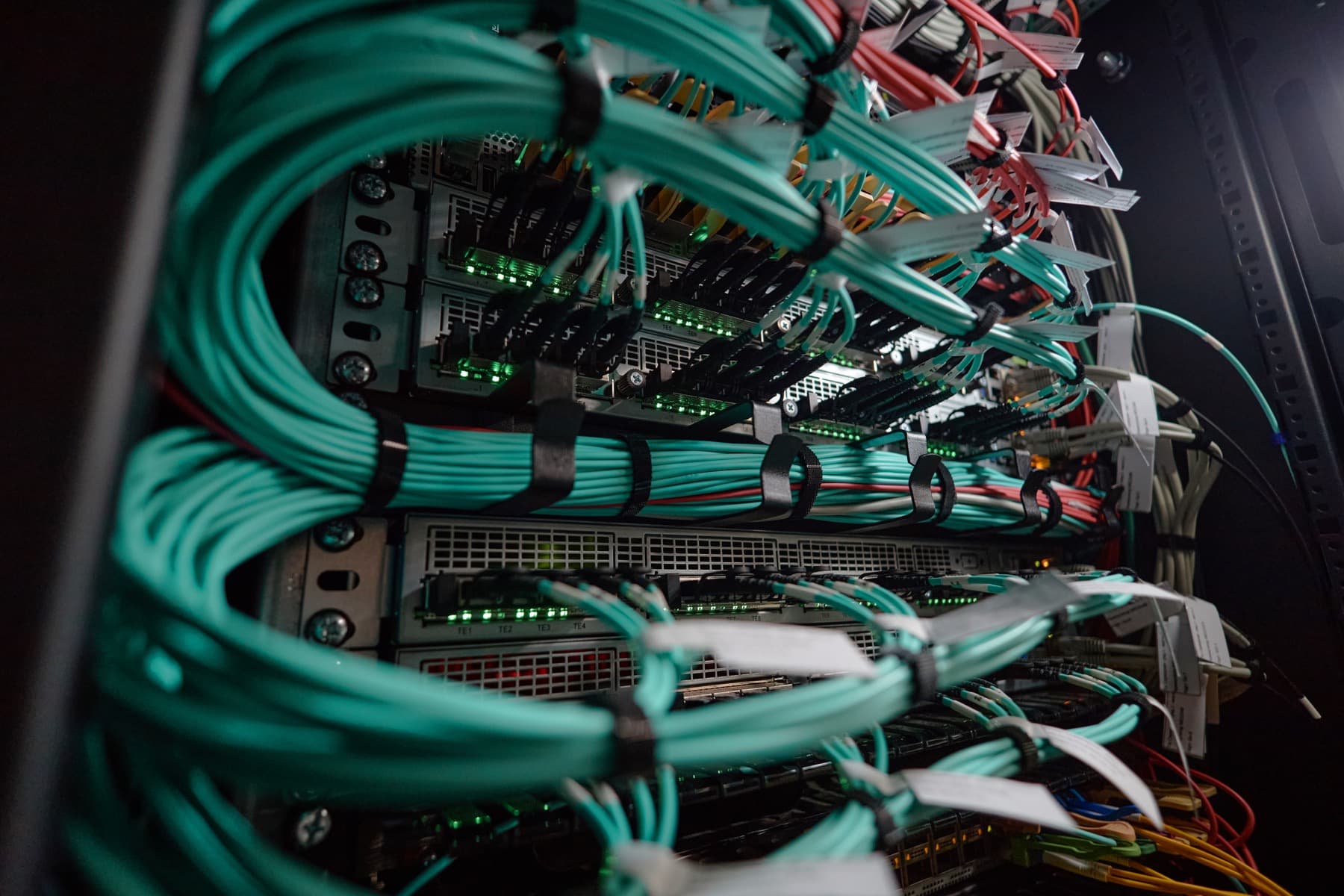
Structured cabling is the organized system of standardized cabling, pathways, and connection points -- copper and fiber optic -- that carries voice, data, video, and power over Ethernet across an entire building or campus, replacing ad-hoc "point-to-point" wiring with a unified infrastructure designed to TIA-568 and BICSI standards. Done right, structured cabling is the physical foundation everything else depends on: your Wi-Fi access points, VoIP phones, security cameras, access control readers, POS systems, and servers are only as fast and reliable as the cabling plant behind the wall. As a licensed low voltage contractor (C-7 License #1116987) and BICSI-certified structured cabling contractor, Mytek Pros designs and installs cabling systems that are built to spec, properly labeled, tested, and documented -- not the tangled, mislabeled mess so many businesses inherit from unlicensed installers.
Choosing the right cable matters more in 2026 than it used to. Cat6 has long been the commercial default, but Cat6A cabling is quickly becoming the practical standard for new office network cabling and multifamily projects because it supports 10 Gbps at full 100-meter runs and handles the heat generated by dense PoE++ (802.3bt) deployments -- Wi-Fi 7 access points, AI-enabled PTZ security cameras, smart lighting, access control, and other IoT devices that can draw up to 90 watts per port. Category 8 remains confined to short 30-meter data center runs, so for general premises cabling in commercial buildings, offices, and apartment communities across California, Cat6A is the future-proof choice, not an overkill one. On the fiber side, we design single-mode and multimode fiber optic cabling for backbone runs, building-to-building links, and data center connections, including higher fiber-count trunk systems for clients anticipating AI workloads, edge compute, or future 800G bandwidth needs. Whether the job calls for cat6 installation, cat6a cabling, or business fiber installation, our BICSI-trained technicians terminate and test every run to certify performance, not just continuity.
Structured cabling installation cost varies by drop count, cable category, building type (new construction vs. retrofit), and conduit/pathway conditions, but most commercial clients budget on a per-drop basis once we've walked the space -- ask us for a written estimate rather than relying on national averages, since Southern California labor and access conditions differ site to site. What doesn't vary is the value of doing it once, correctly: TIA-568 recommends a minimum of two cable drops per work area (voice and data, or dual data), and skimping on drops or using unlicensed installers to save money up front routinely costs more later in service calls, downtime, and rework. Mytek Pros operates as both an MSP and a licensed low voltage contractor, which means the same team that pulls and terminates your cable also manages your network -- so cabling is designed around real-world throughput, PoE budgets, and future growth, not just today's device count. We serve businesses throughout San Diego and Carlsbad, and extend structured cabling, data cabling, and voice and data cabling services into Orange County, Los Angeles, Riverside, and San Bernardino counties for multi-site and regional clients.
Multifamily and affordable housing developers have a specific reason to work with Mytek Pros: our DIR registration (PW-LR-1001158430) qualifies us for prevailing wage and public works structured cabling scope, which matters increasingly as California affordable housing projects layer low-voltage and connectivity requirements alongside the 2026 building code's electric-ready and EV-ready mandates for new multifamily construction. We design fiber-to-the-unit and fiber-to-the-room cabling architectures for smart apartment buildings and MDU projects, giving residents gigabit-capable connections and giving property owners a cabling plant that supports building-wide Wi-Fi, smart access control, and centralized security from day one -- without expensive retrofits down the line. For developers weighing structured cabling installation for multifamily housing in California, engaging a licensed, DIR-registered low voltage cabling contractor at the design/build stage, rather than after walls are closed up, is consistently the difference between a clean rollout and a change-order-heavy one.
Every structured cabling project starts with a site walk and a design that matches your actual usage: how many work areas, what's on each drop today, what's coming in the next five years (PoE++ devices, additional access points, expanded camera coverage), and where fiber backbone versus copper horizontal cabling makes sense. We pull permits where required, follow TIA-568 and BICSI best practices for pathways and separation from electrical, and label and test every cable run so your documentation actually matches what's in the walls -- a basic requirement that's surprisingly often skipped. As a design/build contractor we scope, install, and commission the system as one project rather than handing off between separate design and installation vendors, which keeps timelines tighter in a Southern California labor market where skilled low-voltage technicians are in short supply. Combine that with our standing as a working MSP, and you get a structured cabling contractor who treats the cabling plant as the long-term network asset it is -- not a commodity install.
If you're evaluating structured cabling contractors near San Diego, Carlsbad, or anywhere in Southern California, ask about licensing (C-7), DIR registration if the job touches public or affordable housing funds, BICSI certification, and whether the contractor tests and certifies every drop or just checks for a link light. Mytek Pros can answer yes across the board, and because we also operate as a full-service MSP, we design cabling systems that plug directly into your network, security, and IT strategy instead of existing in isolation. Call (619) 353-5702 or email inquire@mytekpros.com to schedule a site assessment for your office, multifamily property, or affordable housing project.
Every structured cabling project we design and install follows the same disciplined process, whether it's a single-suite tenant improvement or a multi-building affordable housing campus. Installation is scheduled to minimize disruption to occupied buildings, which matters as much on a live construction site as it does in an occupied multifamily property with residents already in place. Every run is tested and certified against TIA/ISO channel standards, and you receive as-built documentation, a labeling and patch panel map, and a maintenance record so future moves, adds, and changes don't start from a blank slate.
Not sure if your existing cabling needs attention? A handful of warning signs show up again and again. Cabling has a practical service life of roughly 10-15 years, and Cat5/Cat5e in particular is now considered obsolete for the bandwidth most buildings need. A newer but increasingly common symptom is PoE-powered devices, access points, cameras, or phones randomly rebooting or running with features disabled because the cabling or switch gear can't deliver stable power to them. If you recognize two or three of these symptoms, or you're planning a renovation, a Wi-Fi 6E/7 rollout, new IP cameras, or electronic access control, it's worth having your infrastructure evaluated before those upgrades expose the gap.
Cat6A has become the practical baseline for new installs in 2026, not just an upgrade option. It's certified to 500 MHz, runs 10GBASE-T at the full 100-meter channel length, and its thicker conductors handle heat buildup better under sustained PoE loads than Cat6, which is now considered legacy-capable and limited to shorter 10GBASE-T runs. That matters because enterprise Wi-Fi 7 access points commonly draw 35-50 watts, and some high-power models need up to 90 watts under the 802.3bt (PoE++) standard; plugging one into older cabling or a standard PoE+ switch often forces it to disable features just to stay within its power budget. We also account for plenum-versus-riser cable ratings on every project: plenum-rated (CMP) cable is required in any air-handling space and must meet UL 910 flame-spread standards, while riser-rated (CMR) cable is not permitted in those same spaces. Getting this wrong isn't a cosmetic issue, it's a fire and building code failure waiting to be caught at inspection.
Our DIR registration (PW-LR-1001158430) and DBE/DVBE/MBE certifications matter most on the projects where compliance is part of the scope, not an afterthought. Affordable housing developments financed through tax-exempt bonds or HCD/CalHFA soft loans typically trigger California prevailing wage requirements, and working with a contractor already registered with the Department of Industrial Relations avoids a compliance gap that can stall funding draws or inspections. On public and public-adjacent projects, our DBE/DVBE/MBE status can also support agency participation goals. Whether the project is a ground-up multifamily community, a senior living campus adding electronic access control and video intercoms, or a commercial tenant improvement in Carlsbad, San Diego County, or elsewhere in California, we bring the same BICSI-certified installation practices and licensed oversight to every drop, and we serve businesses and developers statewide, not just North County San Diego.