
RESTROOM ODOR & ENVIRONMENTAL MONITORING
Better insight.
Better-timed
restroom care.
Restroom odor and environmental monitoring that helps your team know where to look next.
Plan your project Explore the approach ↓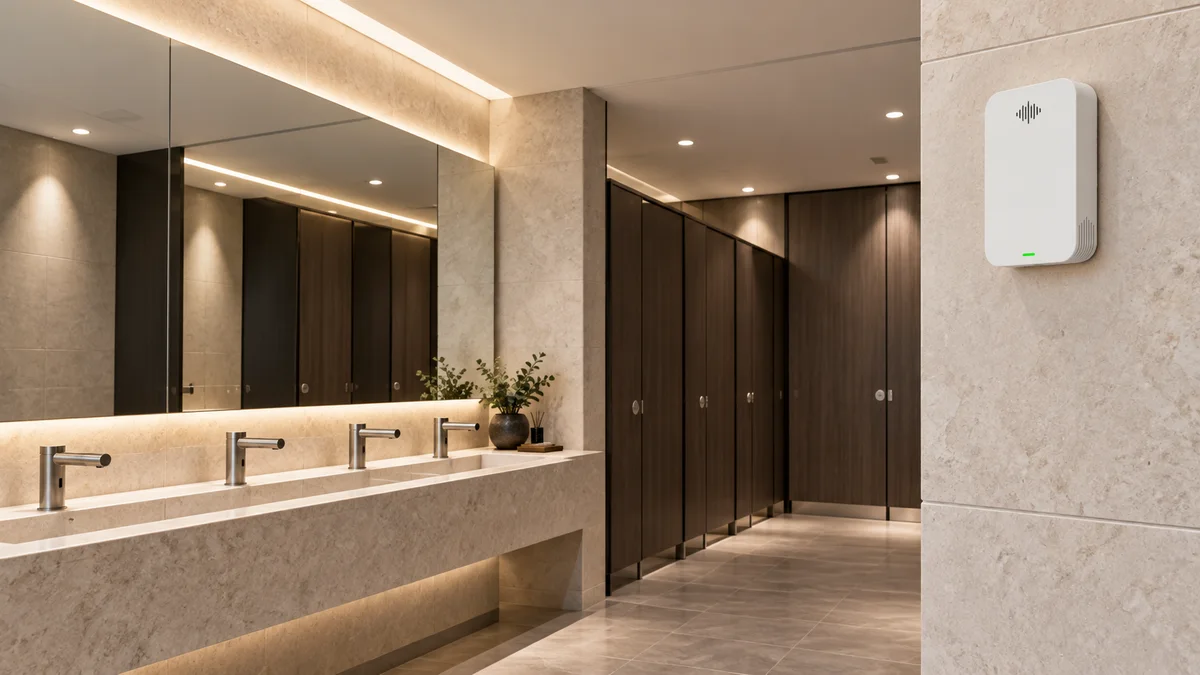
BETWEEN THE SCHEDULED ROUNDS
Conditions change.
Your next round can too.
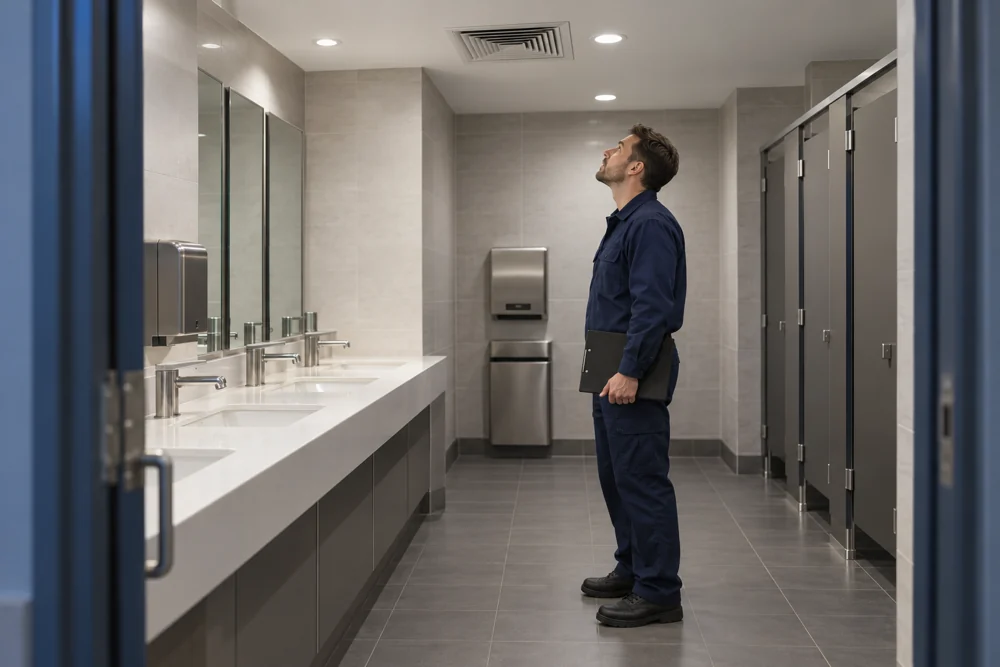
Scheduled rounds may miss changing odor conditions or persistent ventilation issues.
Use environmental readings to focus restroom inspections. Monitor supported odor-related gases and comfort conditions, then route exceptions to the people who can inspect, clean, or investigate ventilation.
Target inspection effort
Identify repeat problem periods
Compare conditions after interventions
FROM READING TO RESPONSE
A signal is useful
when someone can act.
Connect environmental readings to the people responsible for inspection, cleaning and maintenance.
- 01
Sense
Track ammonia, hydrogen sulfide, temperature and humidity.
- 02
Review
Route site-defined exceptions to the responsible team.
- 03
Respond
Inspect, clean or investigate ventilation, then record the action.
- 04
Learn
Review recurring periods and compare conditions after maintenance.
Selected measurements are operational indicators, not a complete assessment of odor or cleanliness.
APPLICATIONS IN PRACTICE
Different sites. A clearer next step.
Illustrative scenarios for facilities teams and cleaning contractors.
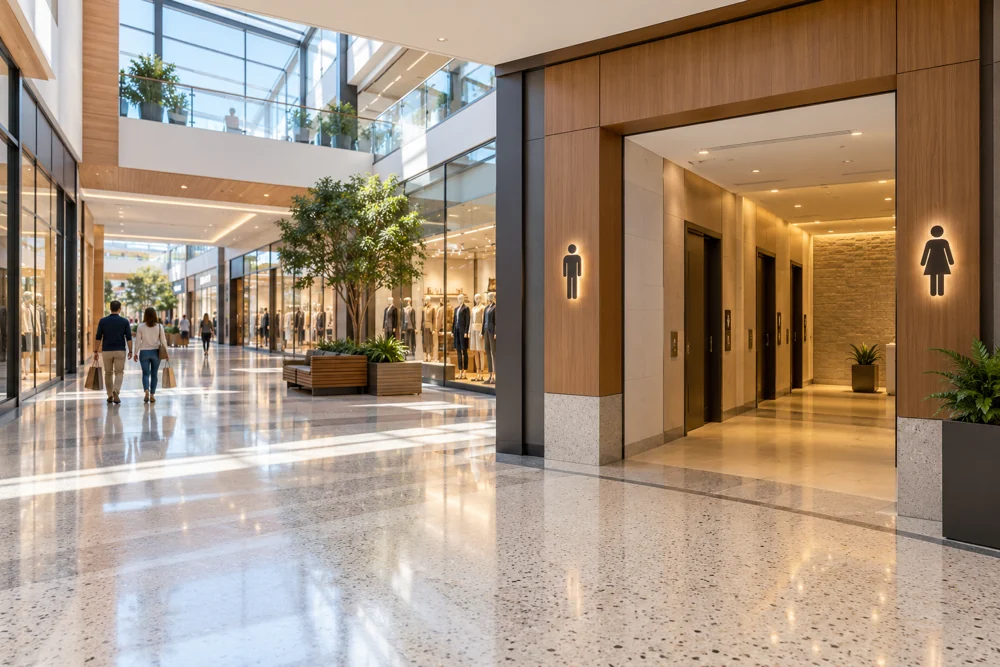
A shopping center receives recurring afternoon complaints.
ObserveTrend odor-related readings by restroom and time.
ActInspect high-exception areas and review cleaning frequency.
ReviewWeekly location trends and recorded actions.
Customer perception and sensor readings are different measures.
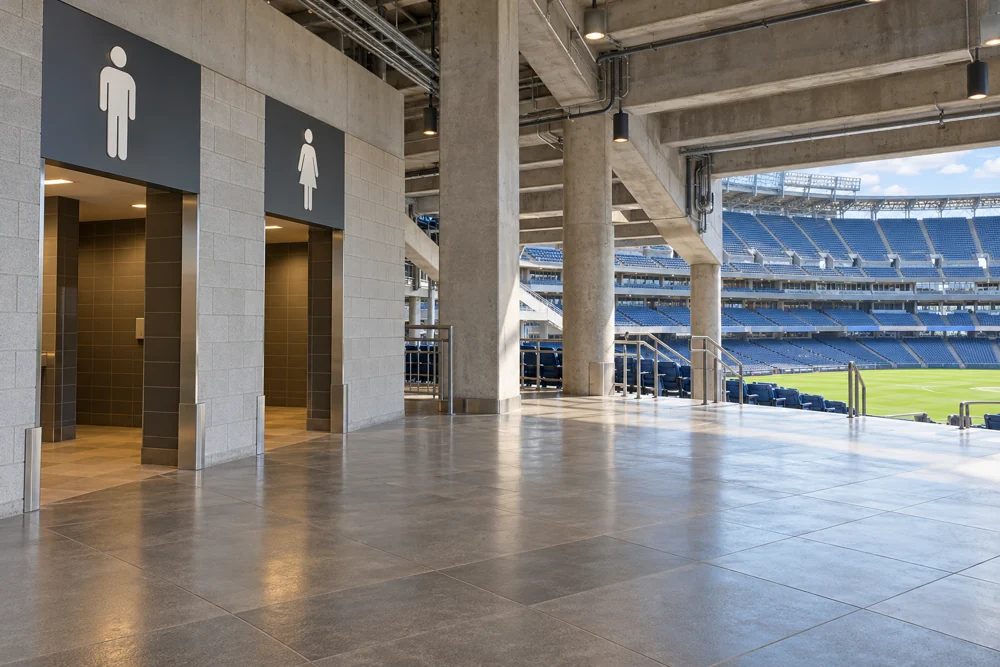
A stadium wants to review event-day cleaning demand.
ObserveObserve gas trends alongside separately measured visitor usage.
ActPrioritize inspection during peak intervals.
ReviewEvent-day trends with use counts and cleaning timestamps.
Usage integration and event schedules require separate data sources.
An office suspects a ventilation problem.
ObserveCompare recurring readings before and after maintenance.
ActHave qualified staff inspect the ventilation system.
ReviewMatched-period environmental comparison.
Readings cannot identify a specific plumbing fault.
DESIGNED AROUND YOUR OPERATION
The right placement.
The right response.
Mytek Pros helps San Diego facilities use supported odor-related gas, temperature and humidity readings to focus restroom inspections. The scope starts with placement, a local baseline and site-specific thresholds, then connects exceptions to cleaning or maintenance staff and records their actions. Discovery confirms locations, response coverage and any ventilation data integration. These readings are operational indicators, not a complete cleanliness assessment.
Explore service planning for San Diego and California projects. Installation, handover and ongoing support are agreed during discovery for the selected equipment and site.
Plan restroom odor monitoring with Mytek Pros ↗Tell Mytek Pros about your site, existing systems, and the decisions you want the data to support.
Installation & scope
- Sensor placement and environmental baseline
- Site-specific thresholds
- Cleaning and maintenance notification design
- Optional ventilation correlation
Measurements & reporting
Measurements
- Ammonia and hydrogen sulfide readings
- Temperature and relative humidity
Reporting options
A configured Mytek Pros service can turn the selected measurements into:
- Gas-level trends and threshold duration
- Exception timing versus recorded cleaning
- Recurring-location and sensor-health summary
Configurable project options; confirm scope during discovery.
System requirements & limitations
- These measurements are operational indicators, not a complete odor or cleanliness assessment
- Do not use this service as a certified toxic-gas alarm or worker-exposure instrument
- Ventilation control needs engineering review and compatible equipment