
Physical security for a life sciences facility starts with people and spaces, not a camera count. A delivery driver, visiting engineer, office employee and instrument vendor may need different access at different times. Build a plan that explains those differences, coordinates the door hardware and gives the client a usable way to review events. Cameras and access logs can support investigations, but they do not substitute for operational procedures or laboratory record controls.
Define access by role and area
List controlled spaces and the roles that need access. Include receiving, storage, instrument areas, shared tenant spaces and communications rooms. Define temporary access, visitor escort arrangements and the process for approving exceptions. Avoid making every employee a system administrator simply to reduce support requests.
Agree who requests, approves, provisions and removes credentials. Changes in role can matter as much as departures. Review how lost cards, expired visitor access and emergency requests are handled. A recurring access review should produce a list of actions and owners, rather than only a list of active badges.
Coordinate the opening, not just the reader
A reader is one part of a door assembly. Document locks, controllers, power supplies, door contacts, request-to-exit devices and existing integrations. Have the qualified design team and applicable authority resolve egress and life-safety behavior. An IT provider should not improvise those decisions during installation.
Agree what happens on a network outage, power loss or controller failure. Confirm how authorized users and emergency personnel are expected to enter or leave under those conditions. Include physical keys and mechanical overrides in the client’s operating procedures where applicable. Test approved scenarios with the people responsible for the opening.
Choose camera views around a purpose
For each proposed camera, identify the question its view should answer. An entrance overview, a receiving-area view and an equipment-room approach can have different requirements. Assess lighting, obstructions, mounting position and the ability to retrieve a relevant event. A higher pixel count alone does not resolve poor placement.
Have the client review privacy, employee notice and any sensitive areas before finalizing coverage. Set permissions for live viewing, exports and administrative changes. Confirm the approved retention period and storage assumptions using the actual camera configuration. Avoid broad promises about legal retention requirements without an applicability review.
Keep event records in context
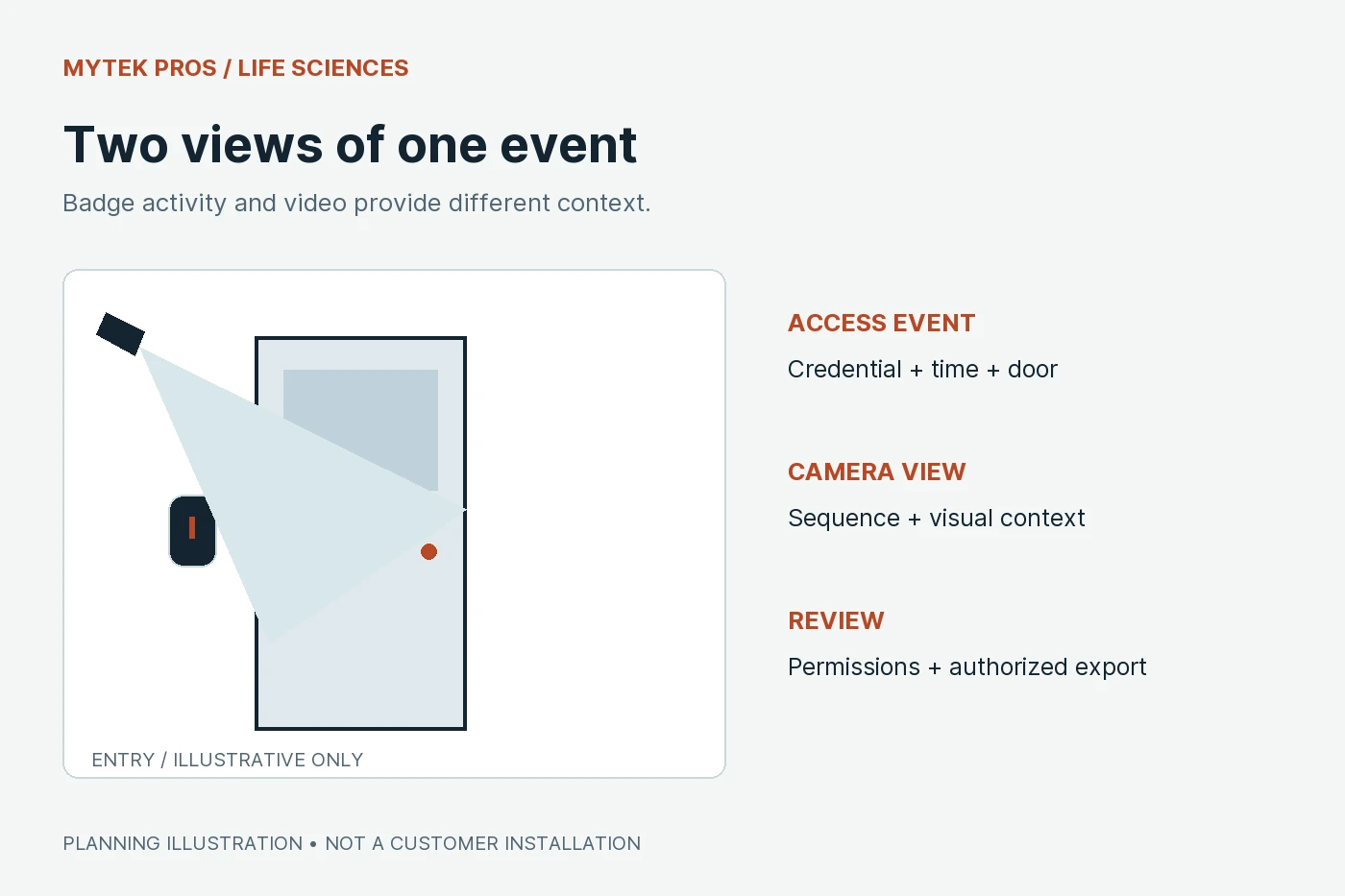
An access event may show that a credential was used, not prove which person crossed the threshold. A video clip may clarify a sequence but still need surrounding context. Align system time settings, document gaps and preserve authorized exports according to the client’s evidence-handling procedures.
Physical access logs are not the same as an electronic-record audit trail under 21 CFR 11.10. A badge system does not document edits to a laboratory record. Where Part 11 applies, the regulated record system and its procedures need their own assessment. Be precise about which system produces each type of evidence.
Hand over a system people can operate
Acceptance should cover enrollment and removal, approved door scenarios, camera views, event search and authorized export. Give named administrators the information and training needed to manage ordinary changes. Record open issues instead of presenting partial testing as a completed operational handover.
Scope door access control, surveillance and the supporting network together. Assign ongoing responsibility for updates, account reviews, storage health and incident coordination. That keeps the security plan connected to daily operations after the installer leaves.
Discuss your facility
Explore technology infrastructure for California life sciences facilities or discuss your scope with Mytek Pros. Share your location, project phase and the systems involved. Keep research data, credentials and sensitive records out of the initial inquiry.