Low-voltage buildout & cabling
Coordinate device locations, cable pathways, racks and trade interfaces before ceilings close. Define labeling, test reports and as-built documentation in the installation scope.
Explore structured cabling
Mytek Pros delivers end-to-end IT services, managed security, and low-voltage design/build for businesses across San Diego County and California.
CALIFORNIA / BIOTECH & LIFE SCIENCES
Connect the buildout to the way your lab works.
Low voltage, computer networks, physical security and temperature monitoring—planned together, with managed IT and cybersecurity to support daily operations.
Carlsbad-based · Southern California on-site projects
CA Contractor License #1116987

ONE COORDINATED TECHNOLOGY SCOPE
New facilities, tenant improvements and occupied-lab upgrades each have different constraints. Define the systems, interfaces and responsibilities before choosing products.
Coordinate device locations, cable pathways, racks and trade interfaces before ceilings close. Define labeling, test reports and as-built documentation in the installation scope.
Explore structured cablingPlan wired and wireless connectivity around instruments, staff and facility systems. Map allowed connections, vendor access and operational constraints before configuration.
Plan lab connectivityCoordinate camera views, credential roles, controlled openings and event retrieval. Work with the design team on hardware interfaces and applicable life-safety requirements.
Review physical securityScope sensors, gateways, alarm routing and log exports around your requirements. Your lab or quality team approves thresholds, response plans, calibration and retention needs.
Map monitoring requirementsScope endpoint and network support, identity access, patching, backup recovery, monitoring and incident coordination. Document vendor restrictions and agreed support responsibilities.
Explore managed ITOrganize inventories, configurations, test results and open findings against client-identified requirements. Make owners, exceptions and review dates visible in the agreed reporting package.
Build an evidence planREQUIREMENTS BEFORE ASSURANCES
Start with the operations and records your team identifies. Map the technical scope to the applicable requirements, with named owners and clear acceptance criteria.
Read the evidence and handover guide →Part 11 is tied to applicable required electronic records. HIPAA is not automatic for every lab. Basic exploratory research is excluded from FDA’s GLP definition of nonclinical laboratory study.
Request diagrams, configuration records, tests, access reviews and exception reports relevant to the scope. Your quality team determines qualification, validation and record requirements.
Installation, commissioning and client-led validation are distinct activities. Technical support and reporting do not guarantee compliance or replace your quality, regulatory or legal advisers.
A PRACTICAL PROJECT SEQUENCE
Review plans, equipment, data flows and the client’s operating requirements.
Resolve pathways, network zones, security interfaces and monitoring responsibilities.
Implement the agreed scope, document functional checks and track open items.
Transfer records and ownership, then agree on monitoring, maintenance and reporting.
LOCAL BASE / PROJECT-SPECIFIC COVERAGE
Our core on-site region includes San Diego, Orange, Los Angeles, Riverside and San Bernardino counties. For projects elsewhere in California, confirm site logistics and remote support needs with us early.
Explore service areas →FIVE PRACTICAL GUIDES
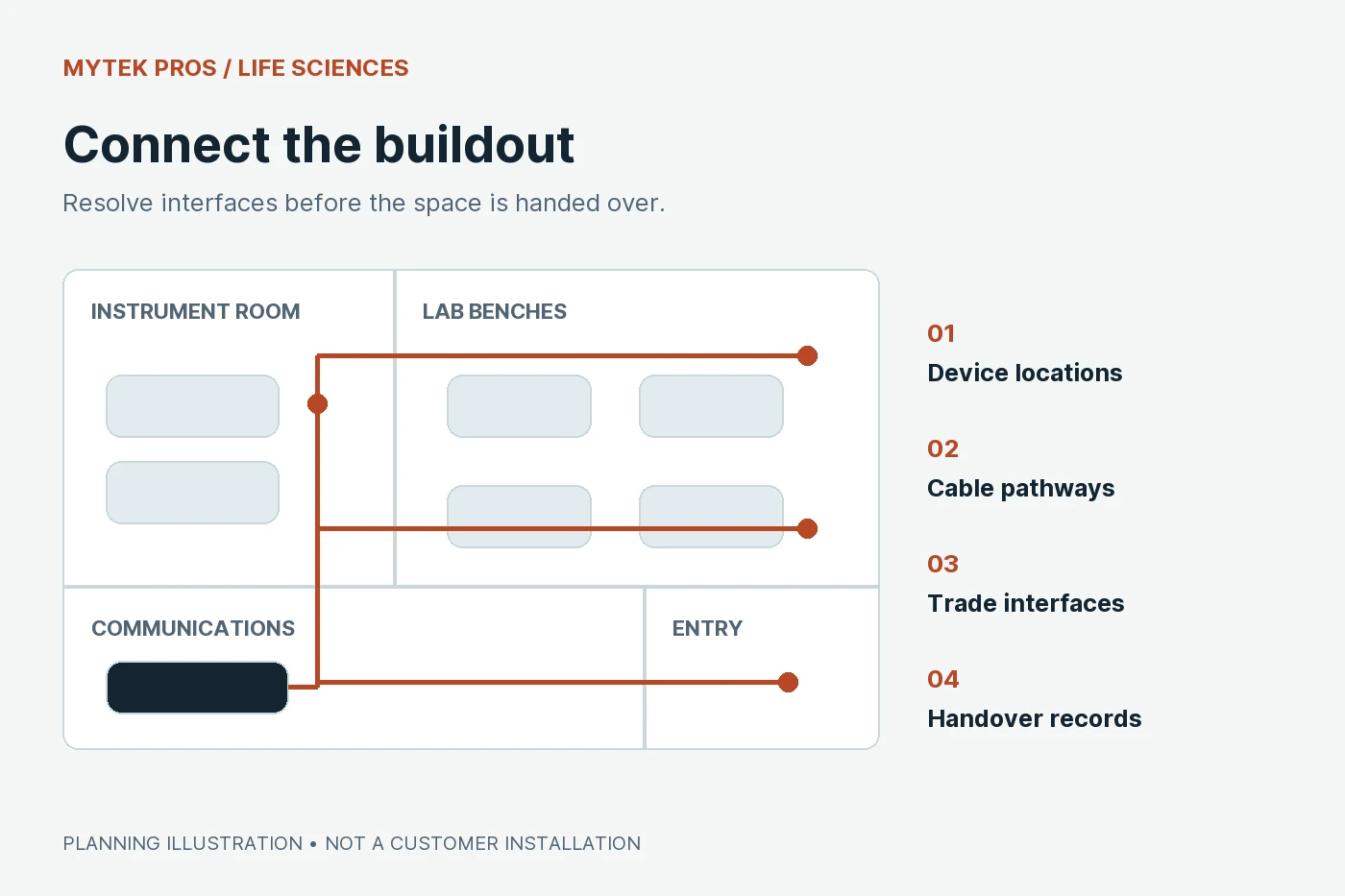 GUIDE 01
Coordinate cabling, networks, security and monitoring before a lab buildout. Define interfaces, responsibilities and handover evidence with your project team.
Read the guide →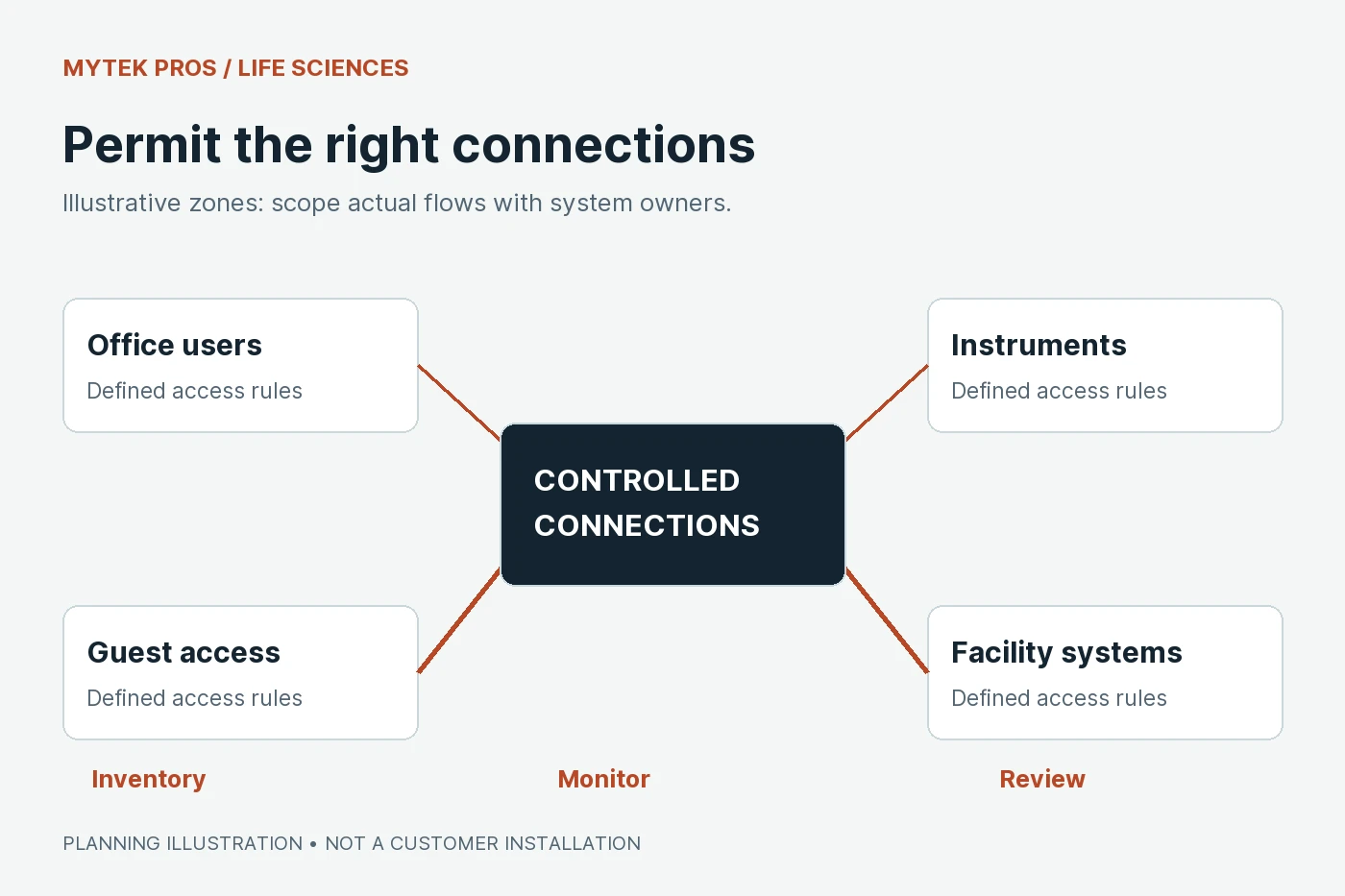 GUIDE 02
Plan lab network zones, vendor access, endpoint support and recovery around instrument constraints. Turn cybersecurity decisions into owned operating tasks.
Read the guide →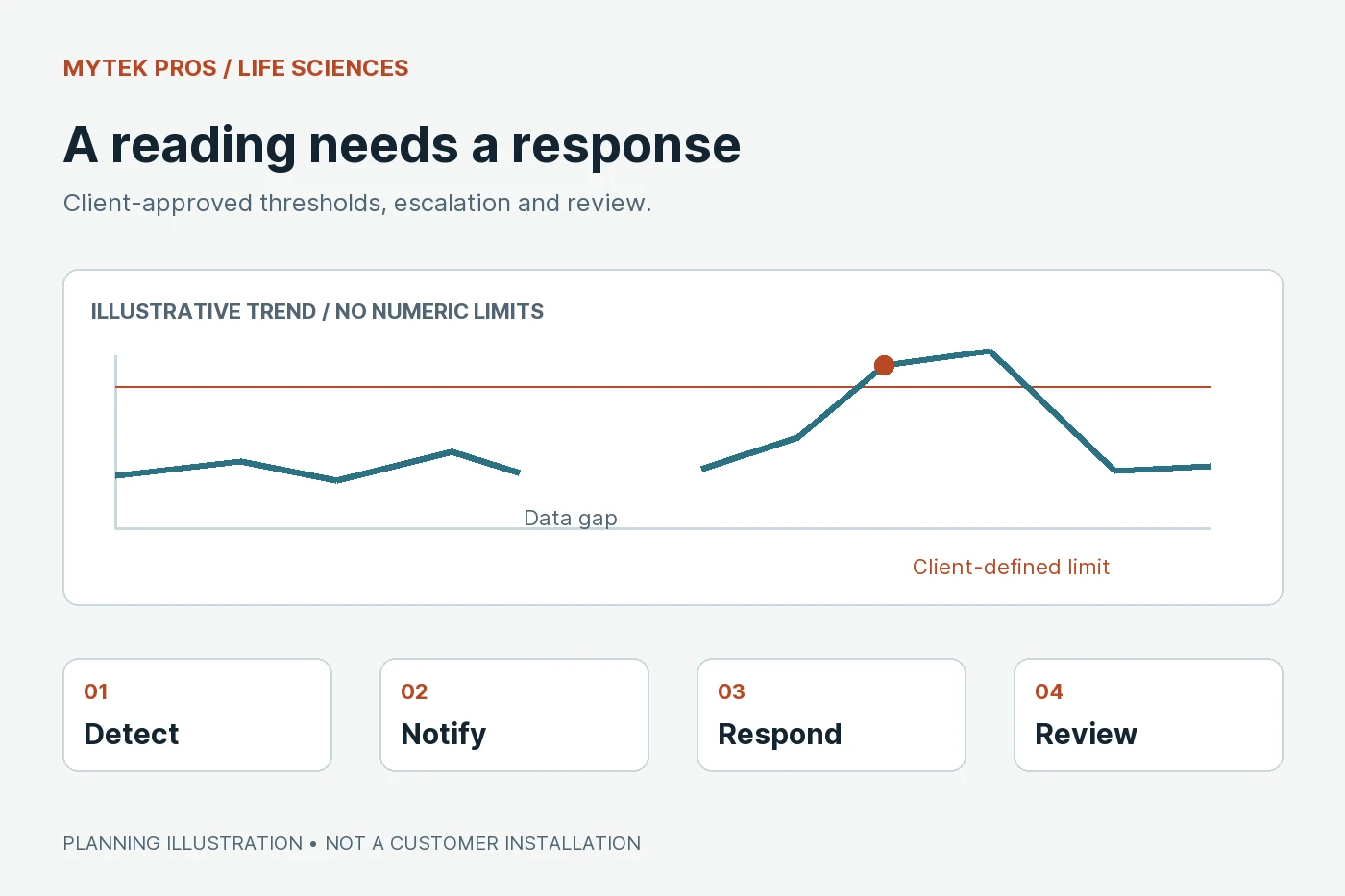 GUIDE 03
Scope sensors, alarm routing, data gaps and temperature-log review. Set thresholds and retention with the team responsible for your materials and records.
Read the guide →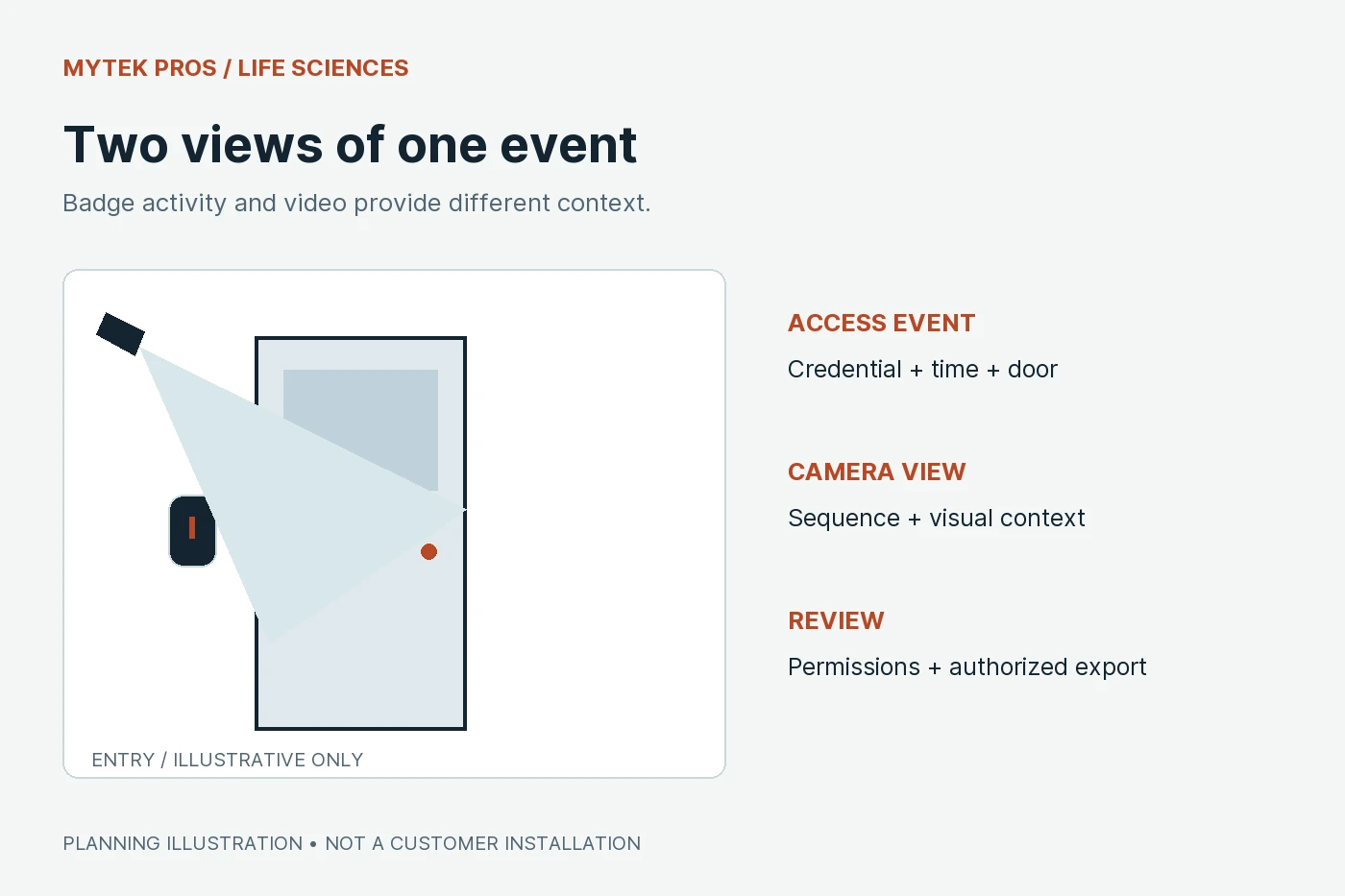 GUIDE 04
Coordinate lab access permissions, camera views and event records with operations. Keep physical-security evidence distinct from electronic-record audit trails.
Read the guide →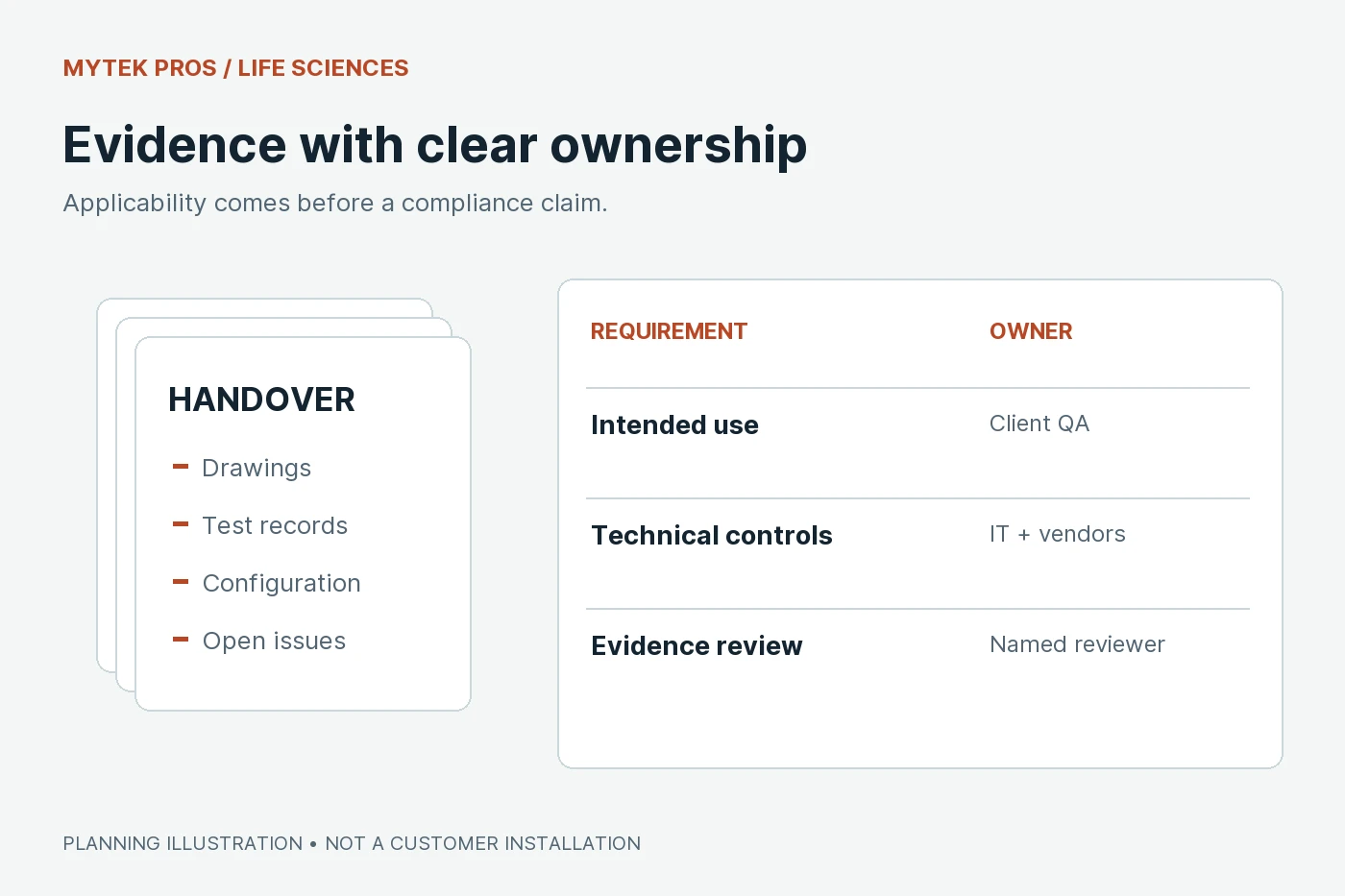 GUIDE 05
Map infrastructure evidence to requirements your quality team identifies. Separate installation records, Part 11 scope and ongoing control reporting.
Read the guide →QUESTIONS BEFORE YOU START
Yes. Discuss installation, network configuration and ongoing managed IT as distinct parts of the scope. Coverage, support hours, vendor interfaces and responsibilities are agreed for your facility before work begins.
No. Applicability depends on the operations, records and organizational role. HIPAA depends on covered-entity or business-associate status and relevant activities. Part 11 concerns applicable required electronic records. Your quality, regulatory and legal team determines the requirements for your facility.
Technical controls and reporting can support applicable requirements, but compliance also depends on operations, procedures, people and client approvals. Infrastructure installation does not confer FDA certification, establish validation or guarantee an audit outcome.
Your responsible lab or quality team defines limits, calibration, review and retention requirements. We scope supporting connectivity, configuration and reporting. Agree on named responders and escalation coverage; a delivered alert is not the same as an operational response.
Start with the location, project phase, floor plans, equipment list and timeline. Include existing systems, vendor constraints and the requirements your team has identified. Do not send credentials, research data or regulated records in the initial inquiry.
LET’S TALK ABOUT YOUR FACILITY
Tell us what you’re building, where it is and which systems need to work together.