
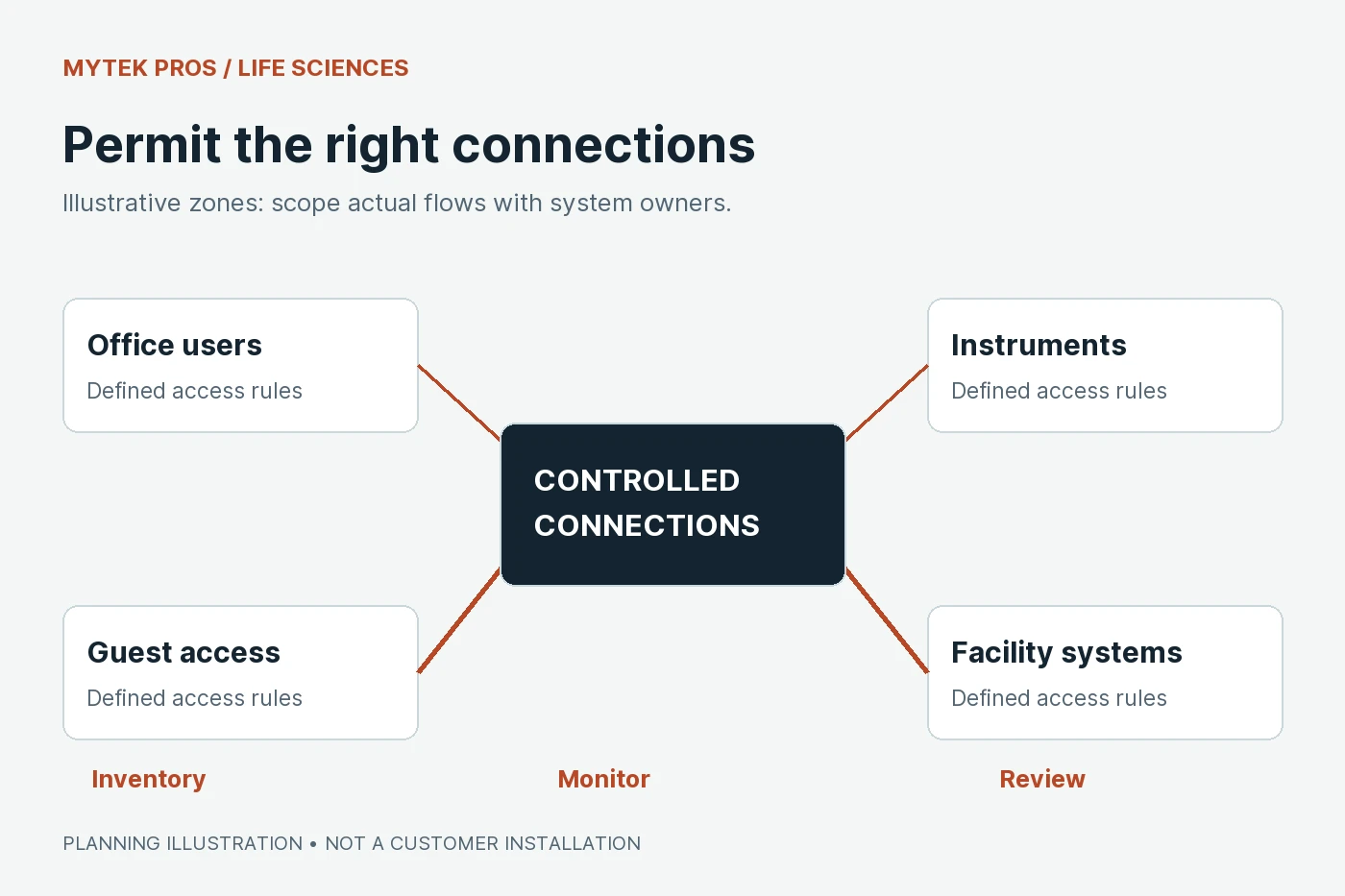
A lab network may connect office laptops, research instruments, cameras, access controllers and environmental monitors. Connecting everything to the same network makes deployment simpler on paper but can obscure who is allowed to communicate with what. Start with an inventory and a description of required data flows. Then scope segmentation and managed IT around the work the facility actually performs, including the systems that cannot accept a routine office patch schedule.
Map devices and allowed connections
For each device, record its owner, location, purpose, supported software and dependency on external services. Include instruments managed by vendors and gateways maintained by facilities. Identify how data leaves the device, who receives it and whether an approved remote-support connection is needed.
Group systems by function and risk before proposing network zones. Office users, instrument systems, building/security devices and guests may need different access rules. A zone is useful only when its permitted connections are defined and enforced. Naming several VLANs without controlling traffic between them does not establish the intended boundary.
Design for instrument availability
NIST SP 800-82 Revision 3 discusses operational technology security with attention to performance, reliability and safety. Its principles can inform planning for connected facility systems, but each instrument and installation still needs a specific assessment. Do not apply aggressive scanning or an endpoint agent to an instrument controller without checking supportability and operational effects.
Where an operating system cannot be updated immediately, document the constraint, approved compensating measures and review date. Restrict unnecessary connections, limit administrative access and agree on a replacement path. An exception needs a responsible owner; it should not become a permanent undocumented exemption.
Make vendor access deliberate
Inventory remote-support tools and determine who approves each session. Prefer individually attributable access, appropriate authentication and limited privileges where the system supports them. Agree how access is removed after a vendor engagement or staff departure. Shared credentials make it harder to understand who changed a setting.
Coordinate access windows with the scientific or facilities owner. Keep an agreed record of work performed and changes made. IT should know whom to contact if a vendor needs urgent access, while the client retains authority over work that could interrupt an experiment or change a regulated process.
Define managed service responsibilities
A managed IT scope should state which endpoints and network devices are covered, what is monitored, how patches are approved and when support is available. Include identity administration, backup review, incident coordination and escalation responsibilities where contracted. Avoid assuming that a monitoring alert means someone is authorized or available to intervene.
Review a practical operating report: inventory changes, patch status and exceptions, account changes, backup results, restore-test evidence and unresolved security findings. Reports should lead to decisions, with owners and deadlines. Neither a green dashboard nor a security tool installation proves that the entire facility meets every applicable requirement.
Rehearse recovery without touching live research
Choose a representative, authorized test environment and define what recovery must demonstrate. Restoring a file is different from restoring a usable instrument workflow with its configuration and dependencies. Let system owners approve the test and verify the result before closing it.
Agree on who isolates affected systems, contacts vendors, preserves evidence and authorizes restoration after an incident. Use managed IT services and backup and recovery planning to define that support scope. Requirements for regulated records remain a separate client-led decision.
Discuss your facility
Explore technology infrastructure for California life sciences facilities or discuss your scope with Mytek Pros. Share your location, project phase and the systems involved. Keep research data, credentials and sensitive records out of the initial inquiry.