

What Commercial CCTV Actually Costs in California in 2026 (And Why Prices Are Climbing Right Now)
Anyone budgeting a commercial camera system off last year's numbers is already working from a stale figure. Omdia's 2026 video surveillance and analytics report found the global market grew 4.3% in 2025 to $27 billion, and forecasts that growth will accelerate sharply to 12.8% in 2026 -- but the report is explicit that this jump isn't businesses buying more cameras, it's component prices climbing under them. Omdia ties the acceleration directly to hyperscale AI data center expansion competing for the same memory chips, semiconductors, and storage components that go into cameras and network video recorders, stretching lead times and pushing hardware costs up across the industry. If a quote for a commercial CCTV install feels higher than what a similar job would have run a year ago, that's not a vendor padding a bid -- it's a real, industry-wide pricing shift, and it's still accelerating.
Three separate forces are stacking on top of each other right now, and each one alone would be enough to move a budget. First, tariffs: 2025 brought a 10% baseline tariff on most imports plus country-specific duties that peaked near 125% on Chinese-origin goods, and LTS -- Hikvision's largest U.S. OEM partner -- told integrators in 2025 to expect 10-25% price increases directly attributed to the tariffs, with industry reporting on IPVM's forums describing roughly a 20% jump in security-hardware component costs as the China, Mexico, and Canada tariffs took effect. Second, memory chips: since September 2025 the global DRAM market has entered a new price-increase cycle driven by AI computing demand, and industry analysts expect camera and NVR hardware prices to keep climbing through 2026 as a direct consequence of that chip shortage. Third, and most consequential for any business with federal funding in its capital stack: NDAA Section 889 and FAR 52.204-25 set a December 2026 compliance deadline for federal contractors, and 2 CFR 200.216 separately bars any recipient of federal grants or loans from using that funding to procure, extend, or renew video surveillance equipment or services from Hikvision, Dahua, and related OEM brands -- forcing a rip-and-replace decision on legacy camera systems in federally funded facilities at the exact moment hardware is getting more expensive.
None of that is abstract for the multifamily and affordable housing developers who make up a meaningful share of our client base. A property financed through HUD, CTCAC, or another federal or federally-adjacent program that's still running Hikvision- or Dahua-sourced cameras isn't looking at a someday problem -- it's looking at a hard December 2026 deadline to have compliant hardware in place, and waiting until a funder's compliance review flags it is the expensive way to find out. Budgeting that replacement now, before the deadline forces an emergency scramble, is the entire point of understanding why 2026 pricing looks the way it does instead of just calling around for the lowest quote.
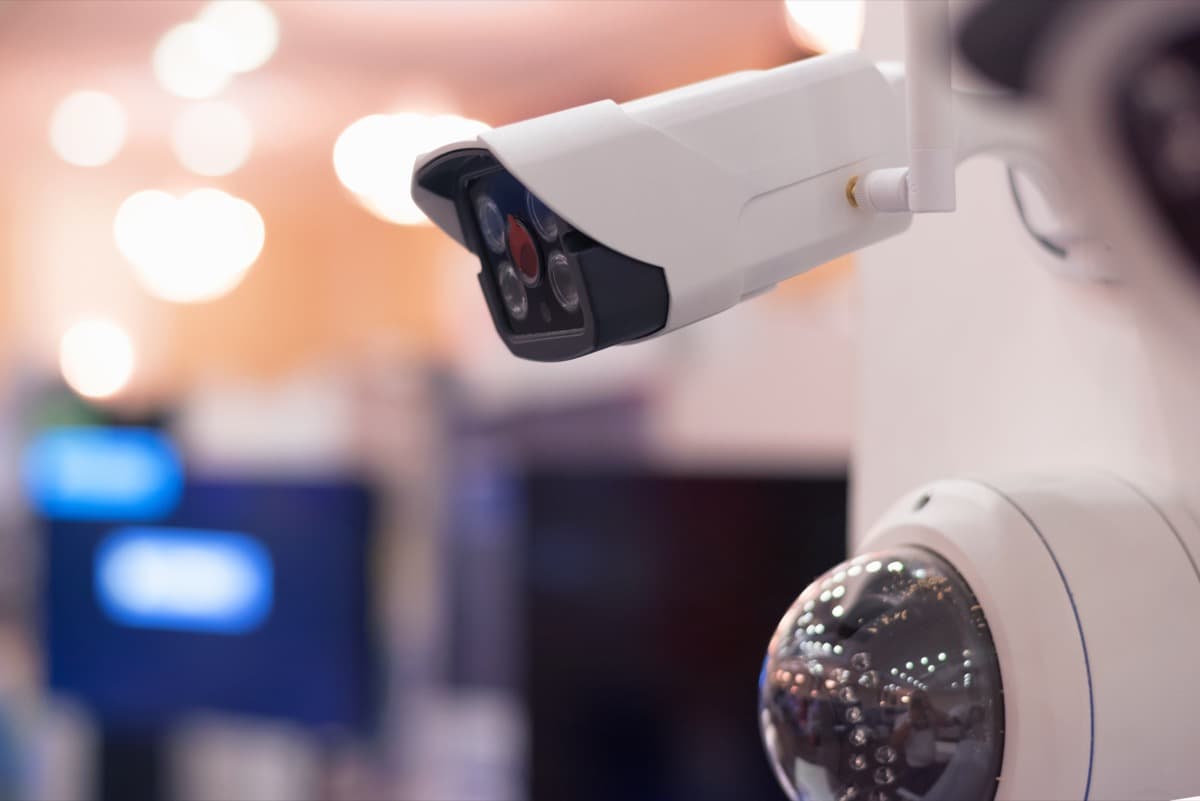
So what does a real 2026 budget actually look like, itemized rather than a single lump number? On the hardware side, entry-level fixed commercial cameras run roughly $300-$600 per unit, and mid-range 4K weather-rated cameras run $600-$1,200 per unit. Installed per-camera costs -- including labor, mounting hardware, and cabling -- commonly range from $150 to $1,500 depending on site complexity, and a full commercial system typically lands between $1,500 and $25,000, with large multi-site portfolios exceeding $50,000. The line item that gets left out of budgets more often than any other is cloud storage: VSaaS (video surveillance as a service) subscription pricing in 2026 runs roughly $3-$60 per camera per month, with most commercial-grade plans landing between $10-$30 per camera per month for 1080p footage with 30-day retention, while 4K resolution, 60-90 day retention, and AI-powered analytics push a single camera's monthly cost to $30-$60. Multiply that across a 40-camera property and the recurring cloud bill alone can rival the original hardware spend within two to three years -- which is exactly the kind of number that needs to be in the initial budget conversation, not discovered on the first monthly invoice.
California adds its own cost layer on top of the national pricing story, and it's a layer that hits publicly funded and affordable housing projects hardest. The statewide minimum wage rose to $16.90 an hour effective January 1, 2026 (climbing again to $17.40 in 2027), and under SB 525, healthcare-facility minimum wages step up again on July 1, 2026 to $23.00 an hour for skilled nursing and similar facilities, or $25.00 an hour for large hospitals and integrated systems -- both separate from, and in addition to, the DIR-set prevailing wage rates that apply to any publicly funded low-voltage or security installation in the state. Those prevailing wage rates are issued twice yearly (effective March 4 and September 1) and govern schools, municipal buildings, and much of the CTCAC- and HUD-financed affordable housing that's actively under construction right now -- which is precisely why a contractor's DIR public-works registration is a real budgeting and eligibility factor for these projects, not a line on a marketing page.
Retail operators have a different, equally concrete reason to move now rather than defer. The National Retail Federation's National Retail Security Survey found shrink reached 1.68% of retail revenue in 2024 -- the highest rate in more than a decade, equal to an estimated $112 billion in annual losses -- and NRF's separate 2025 Impact of Retail Theft & Violence survey, fielded across 70 companies representing 168 brands between June and August 2025, found organized in-store shoplifting incidents rising sharply among reporting retailers. On the financial-planning side, commercial property insurers commonly offer premium discounts of roughly 5-20% for integrated, professionally installed and monitored alarm-and-camera systems, but generally don't extend meaningful discounts for consumer-grade DIY cameras without professional monitoring -- insurers explicitly distinguish a certified professional install from self-installed consumer gear when underwriting, which is worth confirming with your carrier before assuming a system pays for itself through lower premiums alone.
There's also a real, immediate tax incentive working in a buyer's favor this year. For the 2026 tax year, businesses can deduct up to $2,560,000 of qualifying equipment under Section 179 in the year it's placed in service, with the deduction phasing out above $4,090,000 in total purchases. Commercial security and CCTV systems qualify as a real-property improvement under Section 179, which means a business can fully expense camera hardware and installation labor immediately in the year of purchase rather than depreciating it over several years -- a genuine planning lever worth discussing with your CPA before year-end, especially if a system upgrade is already on the table for compliance or capacity reasons.
Mytek Pros designs and installs commercial surveillance systems as a licensed California low-voltage contractor (License #1116987) with DIR public-works registration (PW-LR-1001158430), BICSI certification, and DBE/DVBE/MBE certification, based in Carlsbad and serving San Diego County and businesses throughout California. That DIR registration is the practical reason a publicly funded or affordable housing project needs a contractor who can legally staff the work at prevailing wage in the first place, and our DBE/DVBE/MBE certifications matter to general contractors and agencies with subcontracting-diversity requirements on bond- or grant-funded security upgrades. For federally funded properties facing the NDAA Section 889 deadline, we scope compliant hardware replacements alongside our Compliance Audits service for the data-retention and CCPA-adjacent questions that come up once a system is being budgeted -- though we'll point you to your CPA for Section 179 specifics and your insurance carrier for premium-discount confirmation, since neither is something a low-voltage contractor should be advising on directly. Use our free Camera Coverage Calculator to get a ballpark sense of how many access points your property actually needs, then contact Mytek Pros at (619) 353-5702 or inquire@mytekpros.com for a project-specific quote before the next round of tariff or chip-shortage pricing lands.
Questions about design/build? Get in touch or explore our Design/Build services.